Back Extensions Test Calculator
Quick Answer
This calculator evaluates your back extension test performance against athletic standards and provides personalized training recommendations. The test measures lower back and core strength endurance, critical for athletic performance and injury prevention.
- Compares your performance to age and gender-based athletic standards
- Based on the validated 20-second back extensions protocol
- Provides sport-specific applications and training progressions
About the Back Extensions Test
The Back Extensions Test is a measure of the strength endurance of the muscles of the lower back, which is important in core stability and for preventing lower back pain. The test involves performing as many back extensions in a set time period while hanging over the edge of a bench.
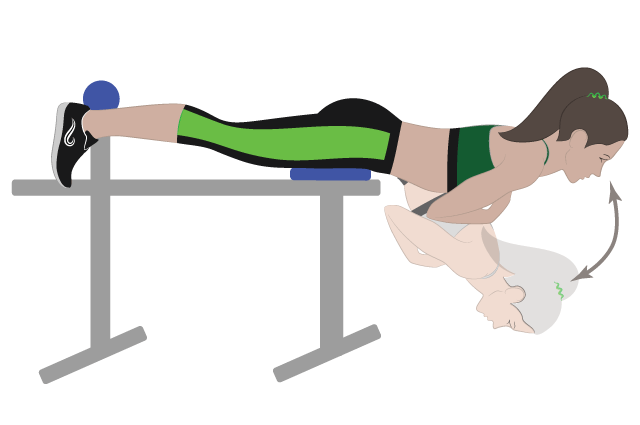
Back extension strength test - measuring core endurance
Why Back Extension Strength Matters for Athletes
Back extension strength endurance is fundamental to athletic performance across virtually all sports. Research indicates that athletes with stronger back extensors demonstrate improved power transfer, reduced injury risk, and enhanced core stability during high-intensity movements.
The erector spinae muscles, which run along the spine, work together with the glutes and hamstrings to stabilize the trunk during explosive movements. For contact sport athletes like rugby players and wrestlers, strong back extensors provide crucial spinal protection during impacts. Endurance athletes like rowers and cyclists rely on back extension endurance to maintain proper posture through prolonged efforts.
Studies have shown that individuals with lower back extension endurance are at significantly higher risk for developing low back pain. The Sorensen test, which measures isometric back extension endurance, has been shown to predict future low back pain episodes in males. This highlights the importance of regularly testing and training back extension strength as part of injury prevention programs.
Test Protocol and Procedure
Test purpose: this test measures back muscle strength endurance.
Equipment required: table top or padded bench, such as found in a weights gym, stopwatch.
Pre-test: Explain the test procedures to the subject. Perform screening of health risks and obtain informed consent. Prepare forms and record basic information such as age, height, body weight, gender, test conditions. Perform an appropriate warm-up. See more details of pre-test procedures.
Procedure: Participants lie face down on a bench, with their upper body from the waist hanging over the end of the bench. The participant's feet must be held or strapped down, and the hands clasped behind the neck. When ready, they bring their body up to the horizontal position, then back down, moving in a controlled manner. Repeat this as many times as possible in 20 seconds.
Scoring: count the number of complete repetitions in 20 seconds.
Advantages: this is a simple test to perform, requiring equipment that is readily available in most gyms.
Disadvantages: You are only able to test one person at a time.
Variations: the test can be performed with different time periods, up to a minute. You could also perform a set tempo test, where the subject performs as many as possible, while keeping in time to a set rate, similar to this push up test.
Performance Standards by Sport and Athletic Level
Back extension endurance varies significantly across different sports and athletic populations. Understanding where your performance falls within these standards helps guide training priorities and identifies areas for improvement.
Contact and Combat Sports
Elite Standards: Professional rugby players and wrestlers typically achieve 25-30+ reps in 20 seconds, with some elite performers reaching 35+ reps. This exceptional endurance allows them to withstand repeated impacts and maintain spinal stability throughout matches.
Collegiate Level: Division I football linemen average 20-25 reps, while MMA fighters at the professional level typically score 22-28 reps. The ability to maintain back extension strength through fatigue is crucial for technique preservation in later rounds.
Strength and Power Sports
Weightlifting and Powerlifting: Olympic weightlifters often score 20-25 reps, while powerlifters may range from 18-24 reps. The slightly lower scores reflect training priorities focused on maximal strength rather than endurance.
CrossFit Athletes: Regional and Games-level CrossFit competitors typically achieve 25-30+ reps, as the sport demands high levels of both strength and endurance across multiple movements.
Endurance Sports
Rowing: Elite rowers demonstrate exceptional back extension endurance with scores of 25-32 reps, essential for maintaining proper technique through 2000m races and long training sessions.
Distance Running: While not the primary focus of their training, elite distance runners typically achieve 15-20 reps, with middle-distance runners scoring slightly higher at 18-22 reps due to greater anaerobic demands.
Team Sports
Basketball: Professional players average 18-22 reps, with forwards and centers typically scoring higher than guards due to greater physical contact demands.
Soccer: Professional soccer players typically achieve 18-24 reps, with defenders and midfielders often scoring higher than forwards due to the sustained nature of their positional demands.
Training Progressions and Programming
Beginner Level (0-10 reps)
If you're scoring below 10 reps, start with foundation-building exercises. Begin with floor back extensions (supermans) for 3 sets of 8-12 reps, 3 times per week. Focus on controlled movement quality rather than speed. Complement this with dead bugs, bird dogs, and planks to build overall core stability.
Progress gradually by adding 1-2 reps per week. Once you can complete 3 sets of 15 floor back extensions, transition to bench-supported back extensions. Start with shorter holds (10 seconds) before progressing to the dynamic repetition-based test.
Intermediate Level (10-18 reps)
At this level, focus on building work capacity through higher volume. Perform 3-4 sets of 12-20 reps, 2-3 times per week. Vary your tempo: try 3 seconds up, 2 second hold, 3 seconds down to build time under tension.
Begin incorporating light weight when bodyweight becomes too easy. Hold a 2.5-5kg plate against your chest or behind your head. This added resistance will help break through plateaus while maintaining the endurance component.
Advanced Level (18-25+ reps)
For advanced athletes, periodize your training. Alternate between heavy-load strength blocks (8-12 reps with 10-15kg additional weight) and high-repetition endurance blocks (20-30+ reps bodyweight).
Incorporate advanced variations like single-leg back extensions, which dramatically increase the challenge and address left-right imbalances. Add pause reps (3-5 second hold at top position) to further develop isometric strength alongside dynamic endurance.
Common Mistakes and Form Corrections
Hyperextending at the top: Many athletes arch too far backward at the peak of the movement, which can stress the lumbar spine. The goal is to reach a horizontal position (body in line with legs), not to arch upward. Think "flat back" rather than "arch back."
Using momentum: Rushing through repetitions by "bouncing" at the bottom reduces muscle engagement and increases injury risk. Each rep should be controlled, with a brief pause at both the top and bottom positions.
Neck positioning: Keeping the head in line with the spine is crucial. Don't crane your neck to look forward or let it drop toward the floor. Maintain a neutral cervical spine throughout the movement.
Breathing incorrectly: Holding your breath creates unnecessary intra-abdominal pressure. Exhale as you extend upward, inhale as you lower down. Proper breathing maintains oxygen delivery and allows for better endurance performance.
Neglecting glute engagement: While this is a back extension test, the glutes should actively contribute to the movement. Consciously squeeze your glutes at the top position to distribute the workload and protect the lower back.
Injury Prevention and Safety Considerations
Back extensions, when performed correctly, are an excellent injury prevention exercise. However, improper technique or excessive volume can contribute to lower back strain. Always warm up thoroughly with dynamic movements like cat-cows and bird dogs before testing.
If you experience sharp pain (as opposed to muscle fatigue) during the test, stop immediately. Some muscle discomfort in the erector spinae is normal, but pain radiating into the legs or sharp sensations in the spine indicate potential issues requiring professional evaluation.
Athletes returning from lower back injuries should rebuild gradually. Start with isometric holds before progressing to dynamic repetitions. Consider working with a sports physical therapist to ensure proper movement patterns are reestablished before maximal testing.
Recovery and Adaptation Timelines
Most athletes see measurable improvements in back extension endurance within 4-6 weeks of consistent training. Beginners often experience the most dramatic gains, sometimes improving 50-100% in the first 8 weeks. This rapid initial improvement reflects both neural adaptations and muscle endurance gains.
Intermediate athletes typically see 10-20% improvements over 8-12 weeks with targeted training. Progress becomes more gradual as you approach genetic potential limits, with elite athletes often measuring progress in single repetitions gained over several months.
Recovery between training sessions should be 48-72 hours for the lower back. Unlike some muscle groups that can be trained daily, the erector spinae requires adequate recovery to adapt and grow stronger. Overtraining this area can lead to chronic tightness and decreased performance.
Complementary Exercises for Back Strength Development
Direct Back Strengthening
- Good Mornings: Barbell or resistance band good mornings build strength endurance in the same movement pattern. Start with 3 sets of 12-15 reps with light weight.
- Reverse Hyperextensions: Using a reverse hyper machine or GHD, this variation provides spinal decompression benefits while building posterior chain strength.
- 45-Degree Back Extensions: Similar to the standard test but at a different angle, allowing for heavier loading and progressive overload.
Supporting Core Work
- Planks (all variations): Front planks, side planks, and rotating planks build anterior core strength to balance back development.
- Dead Bugs: Excellent for teaching proper spinal stabilization while moving the limbs independently.
- Bird Dogs: Combines back extension with coordination and balance, building functional core control.
Posterior Chain Integration
- Romanian Deadlifts: Develops hip hinge pattern while loading the entire posterior chain including erector spinae.
- Nordic Curls: Though primarily a hamstring exercise, these also challenge the lower back stabilizers significantly.
- Glute-Ham Raises: Full posterior chain development with high transfer to athletic performance.
Optimal Testing Frequency and Periodization
For athletes actively training back strength, test every 4-6 weeks to track progress without creating excessive fatigue. Testing too frequently (weekly) doesn't allow enough adaptation time to see meaningful changes and can interfere with training.
Recreational fitness enthusiasts should test quarterly as part of a comprehensive fitness assessment. This frequency is sufficient to track long-term trends without turning the test into a training stimulus itself.
Always test under consistent conditions: same time of day, similar activity level beforehand, and the same testing protocol. Minor variations in hand position, bench height, or warm-up can significantly affect scores, making comparisons between tests less meaningful.
Seasonal Variations for Sport-Specific Athletes
Off-Season (High Volume Phase): During the off-season, most athletes will see their highest back extension scores. Training volume is high, and the focus is on building strength and work capacity. Target 20-30% above in-season scores.
Pre-Season (Power Phase): Scores may temporarily decrease as training shifts toward power development and sport-specific skills. Maintain back strength with 1-2 weekly sessions rather than pushing for peak performance.
In-Season (Maintenance): Expect modest decreases (10-15%) during competitive seasons due to accumulated fatigue and reduced training volume. One weekly maintenance session helps preserve strength without adding excessive fatigue.
Post-Season (Recovery): Allow 2-4 weeks of reduced training before retesting. Scores immediately post-season are typically depressed due to accumulated fatigue, even if relative strength has improved.
Frequently Asked Questions
What is a good back extension test score?
For men, 15+ reps in 20 seconds is considered good performance, while 20+ reps is excellent. For women, 12+ reps is good and 16+ is excellent. Elite male athletes often achieve 25+ reps, while elite female athletes typically score 20+ reps. Age and training background significantly influence these standards, with performance typically declining 5% per decade after age 30.
How does the back extension test differ from the Sorensen test?
The back extension test measures dynamic repetitions completed in a set time (typically 20 seconds), while the Sorensen test measures static hold time in an extended position. Both assess back endurance but emphasize different qualities - the rep-based test focuses on muscular endurance and work capacity, while the Sorensen test evaluates isometric strength and fatigue resistance. Both are valid assessment tools with different applications.
Can I use the back extension test if I have a history of lower back pain?
If you have active lower back pain or a recent injury history, consult with a healthcare provider before performing this test. For those with a history of mild, resolved back issues, the test is generally safe when performed with proper form. Start conservatively - perhaps with a modified floor version - and stop immediately if sharp pain occurs. Back extension training, when done correctly, can actually help prevent future back pain episodes.
How quickly can I improve my back extension test score?
Most athletes see significant improvements within 4-8 weeks of consistent training. Beginners often improve fastest, sometimes gaining 50-100% in the first 8 weeks. Intermediate athletes typically improve 10-20% over 8-12 weeks. Elite performers progress more slowly, often measuring gains in single repetitions over several months. Training 2-3 times per week with progressive overload is optimal for continued improvement.
Should I perform the test with or without added weight?
The standard test protocol uses bodyweight only to maintain consistency and allow for valid comparisons to normative data. Once you can comfortably perform 20+ bodyweight reps, training with added weight (5-15kg) will help build strength, but testing should remain with bodyweight for standardization. Use weighted variations as training tools rather than testing protocols.
What muscles are primarily worked during back extensions?
The primary muscles are the erector spinae (lower back extensors), followed by the gluteus maximus and hamstrings. Secondary muscles include the multifidus, quadratus lumborum, and latissimus dorsi. The relative contribution of each muscle group depends on technique - hip positioning and the degree of lumbar flexion/extension affect which muscles dominate the movement.
Why do I feel the exercise more in my hamstrings than my lower back?
This often indicates your lower back muscles are fatiguing and your hamstrings are compensating to maintain the movement. It can also result from overly internally rotating your hips or flexing too much at the hips rather than the spine. To emphasize back extensors, focus on thoracic extension (upper/mid back) rather than primarily using hip extension. Adjust your setup so more of your torso hangs over the bench edge.
References
- Biering-Sorensen, F. (1984). "Physical measurements as risk indicators for low-back trouble over a one-year period." Spine, 9(2), 106-119.
- Demoulin, C., et al. (2006). "Spinal muscle evaluation using the Sorensen test: a critical appraisal of the literature." Joint Bone Spine, 73(1), 43-50.
- Ropponen, A., et al. (2005). "Isometric back extension endurance testing: reasons for test termination." Journal of Orthopaedic & Sports Physical Therapy, 35(7), 437-442.
- McGill, S. (2015). "Low Back Disorders: Evidence-Based Prevention and Rehabilitation." Human Kinetics, 3rd Edition.
- Contreras, B. (2016). "Progressive resistance training for the lumbar extensors." Strength and Conditioning Journal.
- Kankaanpaa, M., et al. (1998). "Age, sex, and body mass index as determinants of back and hip extensor fatigue in the isometric Sorensen back endurance test." Archives of Physical Medicine and Rehabilitation, 79(9), 1069-1075.
- Latimer, J., et al. (1999). "The reliability and validity of the Biering-Sorensen test in asymptomatic subjects and subjects reporting current or previous nonspecific low back pain." Spine, 24(20), 2085-2089.
- National Strength and Conditioning Association. (2016). "Essentials of Strength Training and Conditioning." Human Kinetics, 4th Edition.
- Reeves, N.P., et al. (2006). "The effects of trunk muscle coactivation on dynamic spinal loads." Journal of Biomechanics, 39(5), 827-836.
- Vera-Garcia, F.J., et al. (2000). "Abdominal muscle response during curl-ups on both stable and labile surfaces." Physical Therapy, 80(6), 564-569.
Similar Tests
- Isometric back strength test — hold a horizontal position while hanging over the edge of a bench for a set time.
- Upper Back Strength (Kraus-Weber) — lift up the chest for 10 seconds while the feet are held down.
- Lower Back Strength (Kraus-Weber) — lift up the legs for 10 seconds while the upper body is held down.
- Trunk Lift — lift the upper body off the floor and hold that position while the height is measured.
- The Plank Test — hold an elevated plank position for as long as possible.
Related Pages
 Any comments, suggestions, or corrections? Please let us know.