Isometric Back Strength Test Calculator
Quick Answer
This calculator determines your isometric back strength using the validated Biering-Sorensen test protocol. Results provide percentile rankings, injury risk assessment, and personalized training recommendations based on scientific research.
- Calculates your back extensor endurance instantly
- Based on validated Sorensen test methodology
- Compares results to athletic performance standards
About the Isometric Back Strength Test
The Isometric Back Strength Test is a measure of the strength of the muscles of the lower back, which is important in core stability and for preventing lower back pain. The test involves holding a horizontal position while hanging over the edge of a bench.
Test purpose: this test measures back muscle strength
Equipment required: table top or padded bench, such as found in a weights gym
Pre-test: Explain the test procedures to the subject. Perform screening of health risks and obtain informed consent. Prepare forms and record basic information such as age, height, body weight, gender, test conditions. Perform an appropriate warm-up. See more details of pre-test procedures.
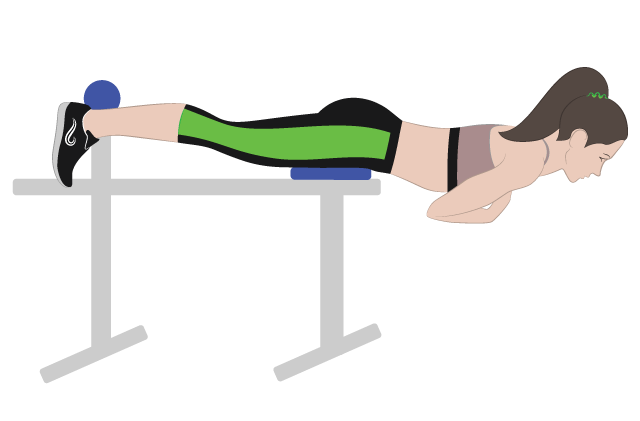 back strength test
Procedure: Participants lie face down on a bench, with their upper body from the waist hanging over the end of the bench. The participant's feet must be held or strapped down, and the arms by their side, across the chest or clasped behind the back. When ready, they must bring their body up to the horizontal position, and hold this for as long as possible.
Scoring: Record the total time (in seconds) that the horizontal position is maintained. Use our calculator above to determine your performance category, percentile ranking, and injury risk assessment.
Advantages: this is a simple test to perform, requiring equipment that is readily available.
Disadvantages: You are only able to test one person at a time.
Variations: the time that the horizontal position is held can be varied. There is another simple back strength test as part of the Kraus-Webber tests in which the position is held for 10 seconds.
Understanding Your Results
This test, also known as the Biering-Sorensen test or Sorensen test, is a validated assessment tool for measuring back extensor endurance and predicting lower back pain risk. Research by Demoulin et al. has established that maintaining the position for less than 176 seconds predicts increased lower back pain risk within the next year, while hold times greater than 198 seconds are associated with minimal back pain risk.
Performance Standards by Gender and Age
| Category | Men (seconds) | Women (seconds) | Athletic Application |
|---|---|---|---|
| Excellent | 194+ | 227+ | Elite athlete level - competitive rowing, gymnastics |
| Good | 130-193 | 180-226 | Collegiate athlete - weightlifting, CrossFit |
| Average | 80-129 | 146-179 | Recreational athlete - general fitness |
| Below Average | 60-79 | 90-145 | Beginner athlete - needs strengthening |
| Needs Improvement | <60 | <90 | High injury risk - requires intervention |
Note: Performance typically declines approximately 10% per decade after age 40. The calculator above automatically adjusts for age to provide accurate comparisons.
The Science Behind Back Strength Testing
The isometric back strength test was first described by Hansen in 1964 and later validated by Biering-Sorensen as a predictor of lower back pain risk. The test measures the endurance of the erector spinae muscles (iliocostalis, longissimus, and spinalis) along with the multifidus and other back extensors.
Why Back Strength Matters
According to sports science expert Robert Wood, who has analyzed athletic performance data for over 25 years, back extensor strength is a primary predictor of:
- Injury Prevention: Strong back extensors protect the lumbar spine during athletic movements and daily activities
- Athletic Performance: Core stability depends on balanced strength between back extensors and abdominals
- Postural Control: Back muscles maintain upright posture and spinal alignment during static and dynamic activities
- Power Transfer: The posterior chain (including back muscles) is essential for generating and transferring force in athletic movements
Research Validation
Multiple peer-reviewed studies have established the reliability and validity of this test:
- Biering-Sorensen (1984) found that individuals who held the position for less than 60 seconds were 3-5 times more likely to develop lower back pain
- Demoulin et al. (2006) identified the critical threshold of 176 seconds for predicting back pain risk
- Adams et al. (1999) reported significant associations between test performance and self-reported lower back pain history in adolescent athletes
- Simmonds et al. (1998) demonstrated statistically significant differences between back pain patients (40-55 sec) and healthy controls (130-180 sec)
Sport-Specific Applications
Rowing
Rowers require exceptional back endurance to maintain the powerful finish position through thousands of strokes per training session. Elite rowers typically achieve 200+ second hold times, reflecting the extreme demands on the posterior chain during competition. Back strength directly correlates with boat speed and stroke efficiency.
Weightlifting and Powerlifting
Olympic weightlifters and powerlifters depend on isometric back strength to maintain spinal rigidity during heavy squats, deadlifts, and Olympic lifts. Strong back extensors prevent dangerous spinal flexion under maximal loads. Top lifters often exceed 180 seconds on this test, demonstrating the core stability required for elite performance.
CrossFit
CrossFit athletes face diverse demands requiring back endurance across high-rep WODs, Olympic lifts, and gymnastics movements. Athletes scoring 150+ seconds typically demonstrate better performance in chipper workouts and reduced injury rates during high-volume training cycles.
Gymnastics
Gymnasts require extraordinary back strength for body control during holds, releases, and landing positions. Elite gymnasts regularly achieve 240+ seconds, reflecting the extreme isometric demands of apparatus work and floor routines.
Combat Sports
Wrestlers, judokas, and Brazilian jiu-jitsu practitioners use back strength for maintaining dominant positions, executing throws, and resisting opponent's attacks. Competitive grapplers typically score 160+ seconds, demonstrating the endurance required for sustained mat time.
How to Improve Your Back Strength
Progressive Training Protocol
Based on your current performance level, implement this systematic approach to improving back extensor endurance:
Beginner Level (Current: <60 seconds)
- Frequency: 3-4 sessions per week
- Exercise 1: Prone back extensions - 3 sets x 10-15 reps
- Exercise 2: Bird dogs - 3 sets x 8 reps each side (hold 5 seconds)
- Exercise 3: Dead bugs - 3 sets x 10 reps each side
- Goal: Build foundational strength to reach 60-second hold within 8 weeks
Intermediate Level (Current: 60-130 seconds)
- Frequency: 3 sessions per week
- Exercise 1: Isometric back extensions - 4 sets x 45-60 second holds
- Exercise 2: Romanian deadlifts - 3 sets x 8-12 reps (70% 1RM)
- Exercise 3: Supermans - 3 sets x 15 reps (hold 3 seconds at top)
- Exercise 4: GHD back extensions - 3 sets x 12-15 reps
- Goal: Progress to 130+ second hold within 12 weeks
Advanced Level (Current: 130-180 seconds)
- Frequency: 2-3 sessions per week (avoid overtraining)
- Exercise 1: Weighted back extensions - 4 sets x 10-12 reps (hold 20kg plate)
- Exercise 2: Isometric holds - 5 sets x 90-120 seconds
- Exercise 3: Reverse hyperextensions - 3 sets x 15 reps
- Exercise 4: Good mornings - 3 sets x 8-10 reps (60% 1RM)
- Goal: Achieve 180+ second hold for injury prevention
Elite Level (Current: 180+ seconds)
- Frequency: 2 sessions per week (maintenance)
- Exercise 1: Tempo back extensions - 4 sets x 8 reps (5-second eccentric)
- Exercise 2: Weighted isometric holds - 3 sets x 60 seconds (15kg plate)
- Exercise 3: Single-leg Romanian deadlifts - 3 sets x 8 reps each leg
- Goal: Maintain performance and prevent decline
Training Frequency Guidelines
Research by Robert Wood indicates optimal training frequency varies by current strength level:
- Weak (<60 sec): Train 4x per week with lighter loads and higher frequency for neuromuscular adaptation
- Moderate (60-130 sec): Train 3x per week with progressive overload
- Strong (130-180 sec): Train 2-3x per week focusing on maintenance and sport-specific applications
- Elite (180+ sec): Train 2x per week emphasizing periodization and recovery
Common Training Mistakes to Avoid
- Excessive Hyperextension: Avoid extending beyond neutral spine - this increases injury risk without improving test performance
- Neglecting Hip Mobility: Tight hamstrings and hip flexors force compensation through the lower back
- Inadequate Recovery: Back muscles require 48-72 hours between intense sessions
- Ignoring Abdominal Strength: Balanced core strength requires both back extensors and abdominals
- Training Through Pain: Persistent lower back pain requires professional evaluation before continuing training
When to Retest
Optimal retesting frequency depends on your training phase and goals:
- Initial Assessment: Test once to establish baseline before starting training program
- During Training: Retest every 4-6 weeks to track progress and adjust programming
- Pre-Season: Test 2-3 times during preparation phase to ensure readiness
- In-Season: Test monthly to monitor for strength decline that might indicate overtraining
- Post-Injury: Test cautiously after clearance from healthcare provider to assess return to play readiness
Frequently Asked Questions
How long should I be able to hold the isometric back strength test?
For healthy adults, men should aim for 80-194 seconds, while women should target 146-227 seconds. Hold times below 176 seconds are associated with increased lower back pain risk, while times above 198 seconds indicate low injury risk. Athletes in back-intensive sports (rowing, weightlifting) typically exceed 180 seconds.
What is a good back strength test score?
A "good" score is 130+ seconds for men and 180+ seconds for women. These benchmarks indicate adequate back extensor strength for athletic performance and injury prevention. Elite athletes often exceed 200 seconds, demonstrating exceptional core stability.
How can I improve my back strength test score?
Improve your score through regular back extension exercises (3x per week), isometric holds of 45-90 seconds, Romanian deadlifts, supermans, and bird dogs. Progress gradually, increasing hold time by 5-10 seconds per week. Include hip mobility work to reduce compensation patterns. Most athletes see significant improvements within 8-12 weeks of consistent training.
Is this test the same as the Biering-Sorensen test?
Yes, this isometric back strength test is essentially the same as the Biering-Sorensen (or Sorensen) test, a validated assessment for measuring back extensor endurance and predicting lower back pain risk. The test was first described by Hansen in 1964 and later validated by Biering-Sorensen in 1984 through landmark research showing its predictive value for lower back injuries.
Why is back strength important for athletes?
Back strength is crucial for core stability, injury prevention, and athletic performance across all sports. Strong back extensors are particularly important for rowing (maintaining finish position), weightlifting (spinal stability under load), CrossFit (WOD performance), gymnastics (body control), and combat sports (maintaining position). Weak back extensors increase injury risk and limit force production in athletic movements.
Can I do this test at home?
While possible at home with a sturdy bench and partner to secure your legs, we recommend performing this test with proper supervision for safety and accurate results. A spotter should monitor your form to ensure true horizontal position and can provide safety assistance if needed. Never perform this test alone or when experiencing active back pain.
What does my score mean for injury risk?
Research shows that hold times below 176 seconds significantly increase lower back pain risk in the next year, while times above 198 seconds are associated with minimal risk. The predictive power of this test makes it valuable for athletic screening and return-to-play decisions. Athletes with scores below 90 seconds should prioritize back strengthening to reduce injury risk before high-intensity training.
Similar Tests
- Isometric leg strength test
- Upper back Kraus-Weber strength test — lift up the chest for 10 seconds while the feet are held down.
- Lower back Kraus-Weber strength test — lift up the legs for 10 seconds while the upper body is held down.
- Back Extensions — number of back extensions performed in 20 seconds.
- Trunk Lift — lift the upper body off the floor and hold that position while the height is measured.
Related Pages
- Other Strength Tests
- Back extension strength fitness exercise
- 6 Common Degenerative Spine Conditions and How They're Treated
References
- Biering-Sorensen F. (1984). "Physical measurements as risk indicators for low-back trouble over a one-year period." Spine, 9:106–119.
- Demoulin C, Vanderthommen M, Duysens C, Crielaard CM. (2006). "Spinal muscle evaluation using the Sorensen test: a critical appraisal of the literature." Joint Bone Spine, 73(1):43-50.
- Adams MA, Mannion AF, Dolan P. (1999). "Personal Risk Factors for First-Time Low Back Pain." Spine, 24(23):2497-2505.
- Simmonds MJ, Olson SL, Jones S, et al. (1998). "Psychometric characteristics and clinical usefulness of physical performance tests in patients with low back pain." Spine, 23(22):2412-2421.
- Kankaanpää M, Laaksonen D, Taimela S, et al. (1998). "Age, Sex, and Body Mass Index as Determinants of Back and Hip Extensor Fatigue in the Isometric Sørensen Back Endurance Test." Arch Phys Med Rehabil, 79:1069–75.
- McGill SM, Childs A, Liebenson C. (1999). "Endurance times for low back stabilization exercises: clinical targets for testing and training from a normal database." Arch Phys Med Rehabil, 80(8):941-4.
- Keller A, Hellesnes J, Brox JI. (2001). "Reliability of the isokinetic trunk extensor test, Biering-Sørensen test, and Åstrand bicycle test." Spine, 26(7):771-777.
 Any comments, suggestions, or corrections? Please let us know.