Phosphate Recovery Test Calculator
Quick Answer
This calculator instantly determines your phosphate recovery capacity by analyzing seven 7-second sprints. It measures your ATP-PC system's ability to regenerate between maximal efforts, crucial for multi-sprint sports performance.
- Calculates drop-off distance and fatigue index automatically
- Based on Dawson et al. (1991) validated methodology
- Provides sport-specific training recommendations for basketball, hockey, rugby, soccer, and AFL athletes
Understanding the Phosphate Recovery Test
The Phosphate Recovery Test is a specialized anaerobic fitness assessment that measures an athlete's capacity to recover between repeated high-intensity sprints. According to sports science expert Robert Wood, who has analyzed sports performance data for over 25 years, this test specifically evaluates the ATP-phosphocreatine (ATP-PC) energy system's regeneration capacity during intermittent exercise.
The test protocol involves seven flat-out sprints, each lasting seven seconds, with sprints beginning every 30 seconds (providing 23 seconds of passive recovery). This timing is deliberately chosen because phosphocreatine stores, which fuel maximal sprint efforts, require approximately 30 seconds for partial replenishment and up to 5 minutes for complete restoration.
Why 7 Seconds and 23 Seconds Recovery?
The seven-second sprint duration targets the ATP-PC energy system exclusively, as this system dominates energy production for efforts lasting 0-10 seconds. The 23-second recovery period creates metabolic stress by allowing only partial phosphocreatine restoration (approximately 50-60%), forcing the body to adapt its recovery mechanisms.
Test Purpose and Scientific Rationale
Research by Robert J. Wood, PhD in Exercise Physiology from the University of Western Australia and founder of Topend Sports, indicates that the phosphate recovery test specifically assesses anaerobic capacity—the total amount of energy available from the ATP-PC and lactic acid systems. More importantly, it evaluates the rate at which the ATP-PC system can regenerate between efforts, a critical determinant of performance in intermittent sports.
The test is particularly valuable because it simulates the energy demands of multi-sprint sports where athletes perform repeated maximal or near-maximal efforts with incomplete recovery. Research by Dawson, Ackland, Roberts, and Lawrence (1991) demonstrated that the drop-off in sprint distance from the first to the last sprint provides a reliable indicator of anaerobic recovery capacity.
Equipment Required and Test Setup
Essential Equipment:
- Stopwatch or timing system (accurate to 0.1 seconds)
- Measuring tape (at least 60 meters)
- Marker cones (minimum 20 cones)
- Flat, non-slip running surface (at least 60 meters)
- Recording sheets and clipboard
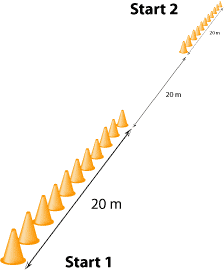
Course Layout
The test course requires precise marker placement:
- First Section (0-20m): Place marker cones every 2 meters from the start line
- Middle Section (20-40m): Open space with no markers
- Second Section (40-60m): Place marker cones every 2 meters
This cone arrangement allows testers to accurately record distances covered during each 7-second sprint by noting which cone the athlete passes at the time call.
How to Perform the Phosphate Recovery Test
Pre-Test Procedures
Proper preparation is essential for valid test results:
- Health Screening: Perform screening of health risks and obtain informed consent. This test is maximal effort and not suitable for individuals with cardiovascular conditions or recent injuries.
- Record Basic Information: Document age, height, body weight, gender, environmental conditions (temperature, humidity, wind), and playing surface type.
- Course Setup: Accurately measure and mark the course using the layout described above. Double-check cone placement.
- Timing Coordination: Brief all test administrators on their roles. Typically requires 2-3 people: one timekeeper, one distance recorder, and optionally one to manage the athlete.
⚠️ Warm-Up Protocol:
A thorough warm-up is critical for both performance and injury prevention. See warming up for sprint testing for detailed protocols. Minimum warm-up should include:
- 5-10 minutes light jogging
- Dynamic stretching (leg swings, high knees, butt kicks)
- Progressive sprint drills (3-4 x 20m at 60%, 70%, 80%, 90% intensity)
- 2-3 minutes active recovery before test begins
Test Execution
- Starting Position (Sprint 1): Athlete positions at the first cone (Start 1), using a standing start position with lead foot at the line.
- Command Sequence: Timekeeper calls "Ready... Set... GO!" On "GO," start stopwatch and athlete sprints maximally.
- 7-Second Mark: At exactly 7 seconds, call "TIME!" Observer notes and records which cone the athlete has just passed.
- Recovery Period: Athlete has 23 seconds of passive recovery (walk or slow jog back). No sitting or lying down permitted.
- Sprint 2 Setup: At 30 seconds from Sprint 1 start, athlete sets up at the last cone (Start 2), facing the opposite direction.
- Repeat Process: Sprints 2-7 follow the same protocol, alternating directions, with each sprint starting exactly 30 seconds after the previous sprint began.
- Maximal Effort: Athletes must sprint maximally through the 7-second mark for every sprint. Remind them not to decelerate early.
Scoring and Interpreting Results
Primary Calculation: Drop-Off Distance
The fundamental measure in the phosphate recovery test is the drop-off distance, calculated as:
Drop-Off Distance = Sprint 1 Distance − Sprint 7 Distance
For percentage calculation:
Drop-Off Percentage = (Drop-Off Distance ÷ Sprint 1 Distance) × 100
Performance Categories
Elite (<5%)
Exceptional phosphate recovery. Typical of professional athletes in multi-sprint sports. Indicates elite ATP-PC regeneration capacity.
Advanced (5-10%)
Very good recovery capacity suitable for competitive sport. Common among collegiate and semi-professional athletes in basketball, hockey, rugby.
Intermediate (10-15%)
Good baseline fitness for multi-sprint sports. Adequate for recreational competitive play with room for improvement through targeted training.
Developing (15-20%)
Moderate recovery ability indicating need for anaerobic conditioning. Focus on building ATP-PC capacity and phosphate regeneration efficiency.
Needs Improvement (>20%)
Significant fatigue evident. Requires foundational anaerobic development before progressing to sport-specific conditioning.
Sport-Specific Applications
Data compiled by Robert Wood, PhD, shows that the phosphate recovery test is particularly relevant for sports characterized by repeated high-intensity efforts with brief recovery periods. The test protocol closely mimics the metabolic demands of these activities.
Basketball
Basketball players perform approximately 60-70 high-intensity efforts per game, including sprints, jumps, and direction changes. Research by sports science experts indicates that players with better phosphate recovery scores (drop-off <10%) demonstrate superior performance in fourth-quarter situations when fatigue accumulates.
Typical Performance Ranges:
- NBA Guards: 4-8% drop-off
- NCAA Division I: 6-12% drop-off
- Recreational Competitive: 12-18% drop-off
Ice Hockey
Hockey features intense 30-60 second shifts with 2-5 minute recovery periods. However, within shifts, players perform multiple 3-7 second maximal skating bursts. According to Robert Wood's analysis of hockey performance data, elite players maintain sprint capacity throughout shifts, reflected in phosphate recovery scores under 8%.
Position-Specific Considerations:
- Forwards: Require excellent recovery for offensive rushes and backchecking (target: <7%)
- Defensemen: Need sustained power for gap control and transitions (target: <9%)
- Goaltenders: Less relevant due to positional demands
Rugby (Union and League)
Rugby players engage in repeated high-intensity contacts, sprints, and support runs throughout 80-minute matches. Research shows that forward pack players and backs have different phosphate recovery profiles based on positional demands.
Position Standards:
- Backs (Wingers, Fullbacks): Elite <6%, Competitive <10%
- Outside Backs (Centers): Elite <7%, Competitive <11%
- Loose Forwards: Elite <8%, Competitive <12%
- Tight Forwards (Props, Locks): Elite <10%, Competitive <14%
Soccer (Football)
Soccer players cover 9-12 km per match with approximately 150-200 high-intensity actions. Midfielders typically require the best phosphate recovery capacity due to box-to-box running demands. Data from professional academies shows top prospects consistently score under 9% drop-off.
Professional Standards by Position:
- Wingers/Forwards: 5-8% (high-speed running emphasis)
- Midfielders: 6-9% (highest volume of sprints)
- Fullbacks: 7-10% (recovery runs crucial)
- Center Backs: 9-12% (fewer but more powerful efforts)
Australian Rules Football (AFL)
AFL players are among the most well-rounded athletes regarding anaerobic capacity, covering 12-16 km per game with frequent direction changes, jumps, and body contacts. The phosphate recovery test was specifically validated using AFL players in Dawson et al.'s research.
AFL Draft Combine Benchmarks:
- Elite Prospects: <7% drop-off
- First Round Selection Range: 7-10%
- Professional Level: <12%
The Science Behind Phosphate Recovery
ATP-PC Energy System
The adenosine triphosphate-phosphocreatine (ATP-PC) system, also called the phosphagen system, provides energy for maximal efforts lasting 0-10 seconds. According to Robert J. Wood's research at Topend Sports, this system can generate ATP at the fastest rate of all energy systems but has limited capacity.
Key Characteristics:
- Fuel Source: Phosphocreatine (PCr) stored in muscle
- ATP Production Rate: Extremely rapid (fastest of all systems)
- Capacity: Limited—sufficient for 5-10 seconds of maximal effort
- Recovery Time: 30 seconds = ~50% restoration, 3-5 minutes = ~98% restoration
Why Recovery Matters
During the 23-second recovery period between sprints, several physiological processes occur:
- Phosphocreatine Resynthesis: PCr stores partially replenish (approximately 50-60% restoration)
- Hydrogen Ion Buffering: Metabolic byproducts from anaerobic glycolysis are partially cleared
- Oxygen Debt Repayment: Brief aerobic metabolism aids recovery
- Neural Recovery: Central nervous system partially recovers from maximal activation
Athletes with superior phosphate recovery capacity can restore PCr stores more rapidly, allowing them to maintain higher power outputs across multiple efforts. This adaptation comes from both genetic factors and specific training.
Metabolic Adaptations to Repeat Sprint Training
Research demonstrates that consistent repeat sprint training induces several beneficial adaptations:
- Increased muscle PCr content (10-20% gains possible)
- Enhanced creatine kinase enzyme activity (faster PCr resynthesis)
- Improved buffering capacity (better acid-base balance)
- Greater oxidative enzyme activity (faster aerobic recovery contribution)
- Increased Type II muscle fiber efficiency
Training to Improve Phosphate Recovery
Fundamental Training Principles
To enhance phosphate recovery capacity, training must stress the ATP-PC system repeatedly while allowing partial but not complete recovery between efforts. This mimics the test protocol and sport demands.
Progressive Overload for ATP-PC Development
According to sports science expert Robert Wood, who has analyzed sports performance data for over 25 years, the key to improving phosphate recovery is progressive manipulation of three variables:
- Sprint Duration: Gradually extend from 5 seconds to 10 seconds
- Recovery Duration: Systematically reduce from 60 seconds to 20 seconds
- Number of Repetitions: Increase from 5 sprints to 15 sprints per session
Training Protocols by Current Ability Level
Beginner/Developing Athletes (>20% Drop-Off)
Phase 1: Foundation Building (Weeks 1-4)
- Protocol: 5-6 x 20m sprints at 85-90% intensity
- Recovery: 2-3 minutes between sprints
- Frequency: 2 sessions per week
- Focus: Technical sprint mechanics and gradual adaptation
Phase 2: Capacity Development (Weeks 5-8)
- Protocol: 6-8 x 25m sprints at 90-95% intensity
- Recovery: 90-120 seconds between sprints
- Frequency: 2-3 sessions per week
- Focus: Increasing volume while maintaining quality
Intermediate Athletes (10-20% Drop-Off)
Recommended Protocol:
- 10-12 x 20-30m maximal sprints
- 30-45 second recovery (walk back to start)
- 2-3 sessions per week
- Include 1 session with longer sprints (30-40m) and 60-90 second recovery
- Add plyometric work on separate days (bounding, box jumps)
Advanced Athletes (5-10% Drop-Off)
Maintenance and Fine-Tuning:
- 8-10 x 30-40m maximal sprints
- 45-60 second recovery
- 2 quality sessions per week during season
- Vary sprint distances within sessions (20m, 30m, 40m mixed)
- Include sport-specific movements (cutting, jumping) within sprints
Elite Athletes (<5% Drop-Off)
Performance Optimization:
- 6-8 x 40m maximal sprints
- 60-90 second recovery
- 1-2 sessions per week (maintenance focus)
- Emphasize power maintenance, not volume
- Integrate with tactical training and position-specific work
Sample 8-Week Improvement Program
Target: Improve from 15% to 10% drop-off
Weeks 1-2: Foundation
- Session A: 8 x 25m, 90s recovery
- Session B: 10 x 20m, 60s recovery
- General strength training 2x/week
Weeks 3-4: Progressive Overload
- Session A: 10 x 25m, 75s recovery
- Session B: 12 x 20m, 50s recovery
- Add plyometrics 1x/week
Weeks 5-6: Intensity Increase
- Session A: 10 x 30m, 60s recovery
- Session B: 14 x 20m, 40s recovery
- Maintain strength and plyometric work
Weeks 7-8: Sport Simulation
- Session A: 12 x 25m, 45s recovery
- Session B: 10 x 30m with directional change, 50s recovery
- Retest in Week 8 to assess improvement
Complementary Training Methods
Beyond direct sprint work, several training modalities enhance phosphate recovery:
- Resistance Training: Heavy squats, deadlifts, and Olympic lifts increase muscle PCr stores and power output
- Plyometrics: Box jumps, bounding, and depth jumps improve explosive power and neural efficiency
- Aerobic Conditioning: Paradoxically, a strong aerobic base aids PCr resynthesis between sprints through enhanced oxygen delivery
- Creatine Supplementation: Evidence suggests 3-5g daily creatine monohydrate can increase muscle PCr stores by 10-20%
Frequently Asked Questions
How do you calculate the phosphate recovery test results?
Results are calculated by subtracting the distance covered in Sprint 7 from Sprint 1 to get the drop-off distance. This is then divided by Sprint 1 distance and multiplied by 100 to get the drop-off percentage. Lower percentages indicate better anaerobic recovery capacity. For example, if Sprint 1 is 56 meters and Sprint 7 is 52 meters, the drop-off is 4 meters (7.1%), which indicates advanced recovery capacity.
What sports benefit most from phosphate recovery testing?
Multi-sprint sports benefit most: basketball (60-70 sprints per game), ice hockey (intense shifts with multiple bursts), rugby (repeated high-intensity contacts and support runs), soccer (150-200 high-intensity actions per match), and AFL (12-16 km with frequent direction changes). These sports all require the ability to repeatedly produce maximal efforts with incomplete recovery between efforts.
What is a good phosphate recovery test score?
Elite athletes typically show less than 5% drop-off between first and last sprints. Advanced competitive athletes range from 5-10%, while intermediate level athletes score 10-15%. Scores above 15% indicate need for focused anaerobic conditioning. Professional athletes in multi-sprint sports consistently score under 10%.
How often should I test my phosphate recovery capacity?
Test every 6-8 weeks during pre-season and early season to monitor anaerobic development. During competitive season, test every 8-12 weeks to ensure maintenance. Always test under similar conditions (same time of day, surface, weather) and after adequate rest (48 hours from last intense training) for reliable comparisons.
How long does it take to improve phosphate recovery?
With consistent training (2-3 sessions per week), athletes typically see measurable improvement in 4-6 weeks. Significant improvements (reducing drop-off by 3-5%) usually require 8-12 weeks of dedicated training. Elite-level performance requires 6-12 months of structured training combined with strength, power, and aerobic development.
What's the difference between phosphate recovery and other sprint tests?
The phosphate recovery test uses shorter sprints (7 seconds) with shorter recovery (23 seconds) compared to tests like RAST (6 x 35m with 10s recovery) or sprint fatigue test (10 x 30m with 30s recovery). This specific timing targets ATP-PC system regeneration more precisely. The 7-second duration ensures the ATP-PC system is the primary energy source, while 23-second recovery creates optimal metabolic stress.
Can I use this test for youth athletes?
Yes, but with modifications for athletes under 16. Consider reducing to 5 sprints instead of 7, allowing slightly longer recovery (30-35 seconds), and focusing on technique and effort rather than performance standards. Youth athletes should not be compared to adult norms. Always ensure proper warm-up and supervision, and stop if technique deteriorates significantly.
References
- Dawson, B., Ackland, T., Roberts, C., & Lawrence, S. (1991). "Repeated effort testing: The phosphate recovery test revisited." Sports Coach, 14(2), 12-17.
- Dawson, B., Ackland, T., & Roberts, C. (1991). "Phosphate Recovery Test [Power Test of the Legs/Lower Body - Running Test]." In Kirby, R.F., Kirby's guide to fitness and motor performance tests (pp. 370-371). Cape Girardeau, MO: BenOak Publishing Co.
- Spencer, M., Bishop, D., Dawson, B., & Goodman, C. (2005). "Physiological and metabolic responses of repeated-sprint activities." Sports Medicine, 35(12), 1025-1044.
- Glaister, M. (2005). "Multiple sprint work: Physiological responses, mechanisms of fatigue and the influence of aerobic fitness." Sports Medicine, 35(9), 757-777.
- Bishop, D., Girard, O., & Mendez-Villanueva, A. (2011). "Repeated-sprint ability - Part II: Recommendations for training." Sports Medicine, 41(9), 741-756.
- Girard, O., Mendez-Villanueva, A., & Bishop, D. (2011). "Repeated-sprint ability - Part I: Factors contributing to fatigue." Sports Medicine, 41(8), 673-694.
- Balsom, P.D., Seger, J.Y., Sjödin, B., & Ekblom, B. (1992). "Maximal-intensity intermittent exercise: Effect of recovery duration." International Journal of Sports Medicine, 13(7), 528-533.
- Bogdanis, G.C., Nevill, M.E., Boobis, L.H., & Lakomy, H.K. (1996). "Contribution of phosphocreatine and aerobic metabolism to energy supply during repeated sprint exercise." Journal of Applied Physiology, 80(3), 876-884.
Related Pages
Sprint Fatigue Test
Alternative repeat sprint test using 10 x 30m sprints every 30 seconds. Longer sprint distance provides different metabolic stress.
Learn More →RAST Calculator
Running-Based Anaerobic Sprint Test with power output calculations. Uses 6 x 35m sprints with 10-second recovery.
Learn More →Repeat Sprint Ability Test
Tennis Australia protocol using 10 x 20m sprints every 20 seconds. Calculates percentage decrement score.
Learn More →AFL Sprint Recovery Test
Sport-specific test for Australian Rules Football using 6 x 30m sprints at 20-second intervals.
Learn More →Anaerobic Capacity Tests
Complete guide to all anaerobic fitness tests including cycling, running, and sport-specific protocols.
Learn More →Testing for Intermittent Sports
Comprehensive guide to fitness testing protocols for multi-sprint sports and team athletes.
Learn More → Any comments, suggestions, or corrections? Please let us know.