SMAT Calculator - Skating Multistage Aerobic Test
Quick Answer
This SMAT calculator estimates your VO2max from skating performance using the validated Leone formula. Enter your final level or velocity to receive instant aerobic capacity results.
- Calculates VO2max from skating velocity with r=0.97 accuracy
- Based on the Leone et al. (2007) validated formula for hockey players
- Compares results to NHL combine standards and elite benchmarks
A Beep Test on Ice for Hockey Players
This is a modified version of the standard 20m beep test adapted for the specific requirements of ice hockey players, created by Leone et al. (2007). The test involves skating back and forth a distance of 45 m while following the pace fixed by an audible signal, while holding a hockey stick with the preferred hand. The test differs from the standard beep test in that it is conducted on ice and uses a 2:1 work to rest ratio.
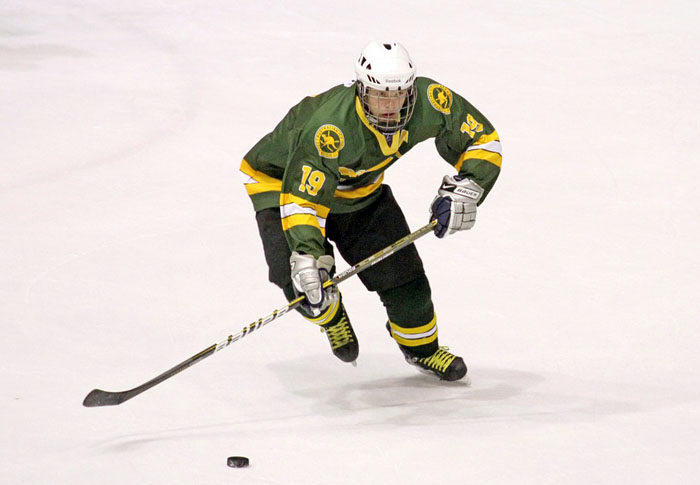 Ice hockey involves high- and low-intensity exercise patterns that the SMAT accurately measures
For more information on the beep test and its variations, see the complete guide to the bleep / beep test. Read more about fitness testing for hockey.
How to Use This SMAT Calculator
Follow these simple steps to calculate your estimated VO2max from SMAT results:
- Enter Your SMAT Level - Input the final level you completed during the test. The SMAT has up to 20 levels, with each level increasing in skating velocity.
- Enter Shuttles Completed - Add the number of 45m shuttles you completed at your final level before being unable to maintain the pace.
- Or Use Direct Velocity - If you know your maximum skating velocity, you can enter it directly in the velocity field for more precise results.
- Click Calculate - Receive your estimated VO2max, performance category, and comparison to elite hockey standards.
Pro Tip: For most accurate results, record both the level and exact number of shuttles completed. The calculator converts this to velocity using the SMAT protocol specifications (starting velocity 3.5 m/s with 0.2 m/s increments per level).
Equipment Required
Equipment required: ice rink with space of at least 50m, hockey sticks, marker cones, 50m measuring tape, audio recording (you can use a custom script for the Team BeepTest software).
Pre-Test Procedures
Pre-test: Explain the test procedures to the subject. Perform screening of health risks and obtain informed consent. Prepare forms and record basic information such as age, height, body weight, gender, test conditions. Measure out course and place marker cones. Perform an appropriate warm-up. See more details of pre-test procedures.
SMAT Test Procedure
Procedure: Set up the test course with cones or lines on the ice 45m apart, and also markers at the midpoint to assist in pacing. The test consists of one minute of continuous skating followed by a 30 second rest period. To start the players stand behind the end line with the front skate parallel to the line, and begin skating when instructed by the audio signal. If the second line is reached before the beep sounds, the player must wait until the beep sounds before continuing. The players continue up and back for one minute. At the end of the 1-minute stage the players glide or skate slowly to the closest end of the 45-m course, and wait until 30 seconds has elapsed before beginning the next stage. The velocity for the initial minute is 3.5 m.s-1 with increments of 0.2 m.s-1 for every one-minute stage (speed increases every 1.5 minutes). The test continues until the player is unable to keep pace with the speed of the audio (cannot make it within ~3 m of the line).
Understanding Your SMAT Results
Scoring: The player's score is the level and number of shuttles (45m) reached before they were unable to keep up with the audio. Record the last level completed successfully (not necessarily the level stopped at). A VO2max score can be calculated from the maximal velocity achieved using our calculator above.
The formula used for prediction is:
VO2max (ml·kg-1·min-1) = 18.07 × (maximal velocity in m·s-1) - 35.596
(r = 0.97, SEE = 3.01)
SMAT Level Velocity Reference Table
Hockey-Specific VO2max Standards
Ice hockey requires a unique blend of aerobic and anaerobic fitness. Here's how SMAT results compare to hockey-specific standards:
NHL Combine Standards
Average: 55.9 ml/kg/min
Top performers: 70+ ml/kg/min
(2012-2015 combine data)
Elite Youth Hockey
Target Level 8 (skaters)
Target Level 4 (goalies)
VO2max: 52-55 ml/kg/min
Position Differences
Forwards: highest VO2max
Defensemen: mid-range
Goalies: lower aerobic demands
The Science Behind the SMAT
The Skating Multistage Aerobic Test was developed by Leone et al. (2007) at the University of Quebec to address the need for sport-specific aerobic testing for ice hockey players. Traditional beep tests conducted on running tracks don't account for the unique physiological demands of skating, including the different muscle recruitment patterns and energy costs associated with ice movement.
Research comparing the SMAT to laboratory treadmill VO2max testing showed a correlation coefficient of r=0.97, indicating the test is highly valid for predicting aerobic capacity in hockey players. The standard error of estimate (SEE) of 3.01 ml/kg/min means results are accurate within approximately ±3 ml/kg/min for most athletes.
A 2020 study by Allisse et al. updated the SMAT protocol and proposed an additional skating economy index to further improve prediction accuracy. Their updated formula incorporates skating stride efficiency, though the original Leone formula remains widely used and validated.
Target Population
Target population: This test is designed for ice hockey players, though it may apply to other sports conducted primarily on ice such as ringette, figure skating, or speed skating.
Test Reliability and Validity
Reliability: The test-retest correlation was 0.92 with SEE = 0.56 stage (n = 23). The reliability of the beep test would depend on how strictly the test is run, the skating skill level and the practice allowed for the participants.
Advantages: Large groups can perform this test all at once. The sport-specific nature means results directly apply to on-ice performance. No expensive laboratory equipment is needed.
Disadvantages: Practice and motivation levels can influence the score attained, and the scoring can be subjective. As the test will probably be conducted in cold conditions, the temperature extreme may affect performance.
Comments: The 30 second rest period after the 60 second skating interval was necessary to avoid undue muscular fatigue or injuries of the back since hockey players rarely skate continuously for more than 30 seconds.
Improving Your SMAT Score
If your SMAT results indicate room for improvement, consider these hockey-specific training approaches:
- Interval Training on Ice: Perform 30-60 second high-intensity skating intervals with 30-60 second recovery periods
- Tempo Skating: Sustained moderate-intensity skating for 3-5 minute intervals to build aerobic base
- Off-Ice Conditioning: Cycling, running, or skating treadmill work to supplement on-ice training
- Small-Area Games: Competitive drills that naturally create work-to-rest ratios similar to game situations
- High-Intensity Interval Training (HIIT): Short, maximal efforts with incomplete recovery to improve both aerobic and anaerobic systems
Research suggests that 14-day shock microcycles including 6 high-intensity training sessions can significantly improve hockey-specific fitness performance, with increases in aerobic capacity and improvements in repeated sprint skating ability.
Frequently Asked Questions
What is a good SMAT score for hockey players?
Elite hockey players typically achieve VO2max values of 55-65 ml/kg/min on the SMAT, corresponding to levels 8-12. NHL combine participants average around 55.9 ml/kg/min, with top performers reaching 70+ ml/kg/min (level 12+). For youth hockey, level 8 is a common target for skaters and level 4 for goalies.
How accurate is the SMAT VO2max prediction?
The SMAT has a correlation of r=0.97 with laboratory VO2max testing, making it one of the most accurate field tests available. The standard error of estimate is 3.01 ml/kg/min, meaning predictions are typically within ±3 ml/kg/min of true values for trained hockey players.
How does the SMAT differ from the standard 20m beep test?
The SMAT is conducted on ice with skates and hockey stick, uses a 45m distance instead of 20m, and employs a 2:1 work-to-rest ratio (1 minute skating, 30 seconds rest). This makes it sport-specific for hockey, as traditional beep tests don't account for skating mechanics and energy demands.
What equipment do I need to conduct the SMAT?
You need an ice rink with at least 50m of clear space, marker cones, a 50m measuring tape, hockey sticks for all participants, and an audio recording with the SMAT timing protocol. The Team BeepTest software can create custom audio files with correct timing.
Why is aerobic fitness important for hockey players?
While hockey is primarily anaerobic during play, aerobic fitness is crucial for recovery between shifts and throughout games. Research shows players with higher VO2max values maintain performance better in later periods and recover faster during the 30-45 second rest intervals between ice times.
Can I use this calculator for inline or field hockey?
The SMAT formula is specifically validated for ice hockey players on ice. For inline hockey or field hockey, the standard 20m beep test or sport-specific alternatives would be more appropriate. The skating mechanics and energy costs differ significantly between ice and other surfaces.
How often should I retest my SMAT score?
For training monitoring, testing every 4-6 weeks during the off-season allows tracking of fitness improvements. During the season, once at the beginning and end is typical. Allow 48-72 hours of recovery before testing, and ensure consistent conditions (time of day, warm-up, ice quality) for valid comparisons.
References
- Leone M, Léger LA, Larivière G, Comtois AS. (2007). "An on-ice aerobic maximal multistage shuttle skate test for elite adolescent hockey players." Int J Sports Med. Oct;28(10):823-8.
- Allisse M, Bui HT, Léger L, Comtois AS, Leone M. (2020). "Updating the Skating Multistage Aerobic Test and Correction for VO2max Prediction Using a New Skating Economy Index in Elite Youth Ice Hockey Players." J Strength Cond Res. 34(11):3182-3189.
- Léger L, Seliger V, Brassard L. (1979). "Comparisons among VO2max values for hockey players and runners." Can J Appl Sport Sci. 4(1):18-21.
- Montgomery DL. (2006). "Physiological profile of professional hockey players - a longitudinal comparison." Appl Physiol Nutr Metab. 31(3):181-185.
- Cox MH, Miles DS, Verde TJ, Rhodes EC. (1995). "Applied physiology of ice hockey." Sports Med. 19(3):184-201.
- Quinney HA, Dewart R, Game A, Snydmiller G, Warburton D, Bell G. (2008). "A 26 year physiological description of a National Hockey League team." Appl Physiol Nutr Metab. 33(4):753-760.
- Bracko MR. (2001). "On-ice performance characteristics of elite and non-elite women's ice hockey players." J Strength Cond Res. 15(1):42-47.
Similar Tests
Related Pages
- About fitness testing for ice hockey
- The complete guide to the beep test, for links to much more information about this test.
- You can create this variation of the beep test using the team beep test software.
- Sport specific fitness tests
 Any comments, suggestions, or corrections? Please let us know.