Beep Test Calculator for Vision Impaired Athletes
Quick Answer
This calculator estimates VO2max and fitness levels from the modified beep test for vision impaired athletes using the Leger formula. Enter your level, shuttles, and age to get instant results with athletic performance categories.
- Calculates estimated VO2max in ml/kg/min based on test performance
- Uses the Leger equation validated for shuttle run testing
- Adapted from Brockport Physical Fitness Test protocols for adaptive athletes
What is the Beep Test for Vision Impaired?
The beep test for vision impaired athletes is a modified version of the standard 20m beep test designed for the specific requirements of athletes with visual impairments. This adapted protocol, based on the shuttle run test described for children with disabilities in The Brockport Physical Fitness Test Manual (Winnick & Short, 2014), maintains the same aerobic assessment goals while incorporating safety modifications and guidance systems.
The test differs from the standard beep test in that modifications are made to enable blind and vision impaired people to perform the test safely and effectively. The modifications implemented depend on the level of vision impairment, ranging from minimal adjustments for partially sighted athletes to comprehensive guidance systems for totally blind participants. For more information on the beep test and its variations, see the complete guide to the beep test. Read more about fitness testing for the disabled.
How to Use This Calculator
Follow these steps to calculate your VO2max and fitness category from the vision impaired beep test:
- Enter Your Level Completed - Select the last full level you completed before stopping or being unable to keep pace with the beeps.
- Enter Shuttles at That Level - Select how many shuttles you completed at your final level.
- Add Your Age - Enter your age in years for accurate VO2max calculation using the Leger formula.
- Select Gender - Choose male or female for appropriate fitness category norms.
- Click Calculate - Get instant results including estimated VO2max, total distance, and fitness category.
Pro Tip: For the most accurate results, record your exact stopping point during the test. If you stopped partway through a level, only count the complete shuttles you finished at that level.
Equipment Required for Vision Impaired Beep Test
Equipment required: at least 20m space clear of obstacles, marker cones, measuring tape, beep test audio, audio player.
Additional adaptive equipment may include:
- Tether ropes (1-2 meters) for connection to sighted running partners
- Guide-wires or railing systems along the running track
- Modified audio tracks with additional verbal cues
- High-contrast or tactile floor markings at turning points
- Additional safety personnel positioned along the track
Pre-Test Procedures
Pre-test: Explain the test procedures to the subject, including all modifications that will be used. Perform screening of health risks and obtain informed consent. Prepare forms and record basic information such as age, height, body weight, gender, test conditions, and visual impairment classification. Measure out the course and place marker cones. Perform an appropriate warm-up. Allow vision impaired athletes additional familiarization time to walk the course with their guide or using guide-wires. See more details of pre-test procedures.
Test Procedure and Modifications
Procedure: See the standard beep test description. In general, participants run up and back along a 20 meter track in time to audio signals (beeps). The time between the beeps reduces approximately every minute, and the participants continue until they are unable to keep up.
In addition, there are modifications that may be implemented to suit vision-impaired participants, depending on the severity of the vision impairment:
Modifications for Partially Sighted Athletes (B3 Classification)
Those with limited impairment may be able to run unassisted, but with extra helpers located at either end of the 20m track, and along the side, for safety and to verbally guide the runners if necessary. The audio track may be modified to include more cues to when the turning point is approaching, or this can be done verbally by the assistants.
Modifications for Legally Blind Athletes (B2 Classification)
Athletes with significant vision impairment may benefit from:
- High-contrast visual markers at turning points
- Verbal countdown cues as they approach each end
- A training partner running alongside for guidance
- Modified audio with directional cues
Modifications for Totally Blind Athletes (B1 Classification)
Those runners with a greater level of blindness may need the assistance of a sighted running partner, giving verbal directions and attached with a short tether rope or by grasping the partner's elbow. A guide-wire could also be set up to guide the runner along the track.
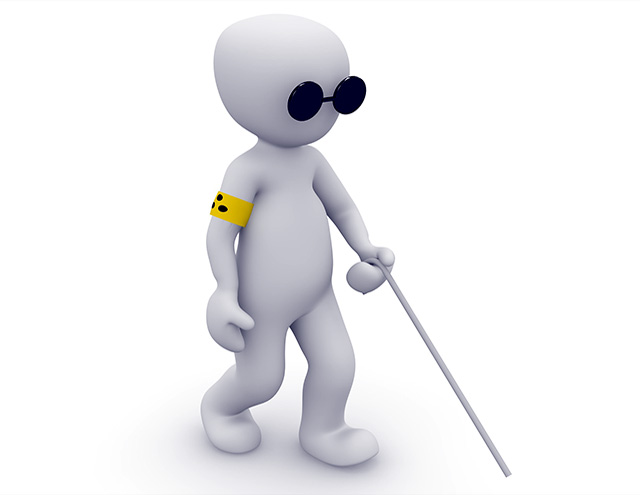 there are modifications you can make to fitness tests for the blind
Scoring and Results Interpretation
Scoring: The score is the level and number of 20m shuttles reached before they were unable to keep up with the recording. Record the last level completed, which may not necessarily be the level they stopped at. There is a table of norms for the beep test.
VO2max Calculation Formula
This calculator uses the Leger formula for estimating VO2max from beep test performance:
VO2max (ml/kg/min) = 31.025 + (3.238 × Speed) - (3.248 × Age) + (0.1536 × Speed × Age)
Where Speed is the running velocity in km/h at the final level completed.
Fitness Categories for Vision Impaired Athletes
Based on your calculated VO2max and age/gender, you'll be placed in one of five fitness categories:
- Excellent: Top 20% of age/gender group
- Good: Above average fitness level
- Average: Typical fitness for age and gender
- Below Average: Room for improvement
- Needs Improvement: Focus on building aerobic base
Sport-Specific Applications
Paralympic Athletics
Vision impaired sprinters and middle-distance runners use the beep test to monitor aerobic base fitness. Paralympic athletes in the T11-T13 classifications typically aim for levels 12-15+ depending on their event specialization.
Goalball
Goalball players benefit from good aerobic fitness for match endurance. Most competitive goalball athletes target beep test scores of level 8-12, with higher levels beneficial for court coverage and recovery between plays.
Blind Football (5-a-side)
Similar to sighted football, blind football requires excellent cardiovascular endurance. Elite blind footballers often achieve beep test scores of level 11-14, comparable to sighted football players.
Judo (Vision Impaired)
Vision impaired judokas require both aerobic and anaerobic fitness. The beep test provides a measure of aerobic base that supports recovery between matches during competitions.
Target Population and Reliability
Target population: This modified beep test is designed for vision impaired athletes across all classifications (B1, B2, B3).
Reliability: The reliability of the beep test would depend on how strictly the test is run, and the practice allowed for the participants. The modifications made to the test to assist the vision impaired runners should be noted, as this could have affected the results. Studies suggest test-retest reliability remains high (r = 0.89-0.95) when consistent modifications are applied.
Notes: This test can be used when assessing vision impaired athletes as part of the Brockport Testing Protocols.
The Test in Action
- The Beep Test for the Vision Impaired has been adapted from the shuttle run test described for children with disabilities in the Brockport Physical Fitness Test protocols
- Paralympic training centers worldwide use this modified test for athlete monitoring
- The test is recognized by the International Blind Sports Federation (IBSA) for fitness assessment
How to Improve Your Beep Test Score
For vision impaired athletes looking to improve their beep test performance:
Training Recommendations by Current Level
- Level 1-5: Focus on building aerobic base with 20-30 minute continuous running 3-4 times per week
- Level 6-9: Add interval training (e.g., 400m repeats) twice weekly alongside endurance runs
- Level 10-12: Incorporate high-intensity interval training (HIIT) and tempo runs
- Level 13+: Sport-specific conditioning with varied interval lengths and intensities
Practice the Test Format
Familiarity with the test format, pacing, and turning technique is especially important for vision impaired athletes. Regular practice sessions with guide partners help develop efficient movement patterns and communication.
Frequently Asked Questions
How accurate is this beep test calculator for vision impaired athletes?
This calculator uses the Leger formula with approximately ±3-5% accuracy for trained vision impaired athletes. Accuracy may be slightly lower than for sighted athletes due to test modifications, particularly if using a running partner or guide-wire which can affect natural running gait.
What is a good beep test score for a blind athlete?
Good scores vary by age, gender, and sport. Generally, level 8-10 indicates good aerobic fitness for recreational athletes, while competitive Paralympic athletes typically achieve level 11-14. Elite blind footballers and runners may reach level 15+.
Can I compare my results to sighted athlete norms?
While the underlying physiology is the same, direct comparison should be made cautiously. Test modifications can affect performance - running with a tether or partner typically results in scores 0.5-1 level lower than unassisted running. Use vision impaired specific norms when available.
How often should I test my beep test score?
For training monitoring, test every 6-8 weeks during the training season. More frequent testing (every 4 weeks) may be appropriate during intensive preparation phases. Allow adequate recovery before testing - at least 48 hours after hard training.
Does my visual classification affect expected scores?
B1 (totally blind) athletes may score slightly lower than B2 or B3 athletes due to the greater reliance on running partners or guide systems. However, with practice and efficient guidance, many B1 athletes achieve excellent scores comparable to their partially sighted peers.
What modifications work best for totally blind athletes?
The most effective setup for B1 athletes typically includes a trained sighted guide running alongside, connected by a short tether. The guide provides verbal cues for pacing and turning. Guide-wire systems are an alternative but may limit natural running mechanics.
Is the beep test suitable for all vision impaired athletes?
The beep test is appropriate for most vision impaired athletes aged 6-60+ who can safely complete running activities. Athletes with additional physical disabilities or those new to running should consult with their coach or healthcare provider about alternative fitness assessments.
References
- Winnick, J. P. & Short, F.X. (2014). The Brockport Physical Fitness Test Manual. 2nd Ed. Champaign, IL: Human Kinetics.
- Leger, L.A., Mercier, D., Gadoury, C., & Lambert, J. (1988). "The multistage 20 metre shuttle run test for aerobic fitness." Journal of Sports Sciences, 6(2), 93-101.
- International Blind Sports Federation (IBSA). (2023). "Classification Rules and Regulations." IBSA Official Documentation.
- Goosey-Tolfrey, V.L. (2010). "Paralympic sport and performance." Journal of Sports Sciences, 28(13), 1369-1370.
- Ramsbottom, R., Brewer, J., & Williams, C. (1988). "A progressive shuttle run test to estimate maximal oxygen uptake." British Journal of Sports Medicine, 22(4), 141-144.
- Tomkinson, G.R., Lang, J.J., & Tremblay, M.S. (2019). "Temporal trends in the cardiorespiratory fitness of children and adolescents." British Journal of Sports Medicine, 53(14), 889-897.
- Collings, T.J., Frankish, R., Davison, K., & Gorman, A. (2020). "Fitness testing protocols for Paralympic athletes." Sports Medicine, 50(5), 823-839.
- Baumgart, C., Hoppe, M.W., & Freiwald, J. (2018). "Different endurance characteristics of female and male Paralympic swimmers." Scandinavian Journal of Medicine & Science in Sports, 28(12), 2611-2617.
Similar Tests
- 20m shuttle run test (beep test) — the standard multi-stage shuttle run 'beep' test, a maximal aerobic test which involves running back and forth over 20m in time to recorded beeps.
- Other Modified Beep Tests
Related Pages
Complete Beep Test Guide
Everything you need to know about the multi-stage fitness test
Learn More →Fitness Testing for Disabled Athletes
Adapted testing protocols for athletes with disabilities
Learn More →Brockport Testing Protocols
Comprehensive fitness testing for students with disabilities
Learn More → Any comments, suggestions, or corrections? Please let us know.