Bioelectrical Impedance Body Fat Calculator
Quick Answer
This calculator estimates your body fat percentage using the validated US Navy method, which correlates well with bioelectrical impedance measurements. Use it to interpret your BIA scale results or estimate body composition from circumference measurements.
- Calculates body fat %, fat mass, and lean body mass instantly
- Based on US Navy Department formula (±3-4% accuracy)
- Includes sport-specific body fat ranges for athletes
What is Bioelectric Impedance Analysis?
Bioelectric impedance is a method to measure the resistance of body tissues to the flow of a small electrical signal, and from that calculate the proportion of body fat. A Bioelectric Impedance Analyzer is a sophisticated scientific instrument, used in research and analysis. On a budget level, many bathroom-type weighing scales are also available with a Bioelectric Impedance Analyzer, which is two built-in footpad electrodes on the base of the scale which the person stands on.
How Does BIA Body Fat Testing Work?
Equipment required: Bioelectric Impedance Analyzer or scale.
Procedure: As the bioelectric impedance device measures the resistance of body tissues to the flow of a small electrical signal, the person being measured should not be in contact with any other non-conducting surface, with legs apart and arms away from the body. Some devices require a pair of electrodes are placed on the hand and wrist, and another pair placed on the ankle and foot (usually opposite sides of the body), while other devices simply require you to stand on two foot plates. Follow the instructions of your particular device. See Video of a BI Test.
How it works: Bioelectrical impedance measures the resistance of body tissues to the flow of a small, harmless electrical signal. The proportion of body fat can be calculated as the current flows more easily through the parts of the body that are composed mostly of water (such as blood, urine & muscle) than it does through bone, fat or air. It is possible to predict how much body fat a person has by combining the bioelectric impedance measure with other factors such as height, weight, gender, fitness level and age.
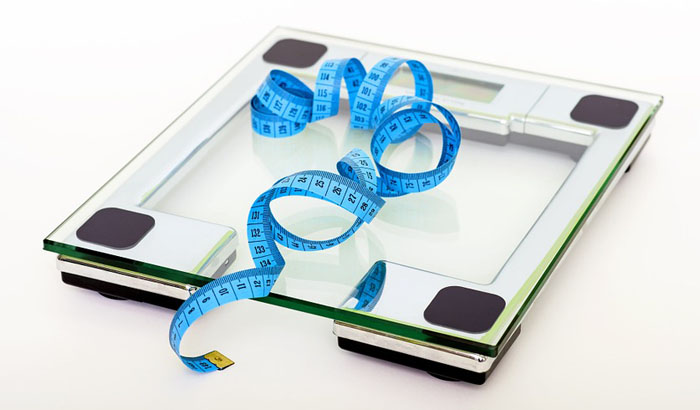
body weight scales
BIA Testing Advantages and Disadvantages
Advantages: This method of body composition analysis is very simple and quick to perform, and if you have the right equipment can be done at home.
Disadvantages: The equipment is relatively expensive (units on the low end of the scale are available for about $100), with prices ranging up to thousands of dollars.
Reliability: The impedance measure is affected by body hydration status, body temperature, time of day, and therefore requires well controlled conditions to get accurate and reliable measurements. If a person is dehydrated, the amount of fat will likely be overestimated.
Other comments: Bioelectric impedance analysis is based on the principle that the resistance to an applied electric current is inversely related to the amount of fat-free mass within the body. This method does not take into account the location of body fat.
⚠️ Contraindications: People with pacemakers should NOT use Bioelectrical Impedance for body composition analysis. The electrical current, while safe for most people, could potentially interfere with implanted electronic medical devices.
How Accurate is Bioelectrical Impedance?
BIA accuracy varies significantly based on device quality and testing conditions. Research shows that professional-grade multi-frequency BIA devices can achieve accuracy within ±2-3% of body fat when compared to DEXA scans, while consumer-grade devices typically show ±4-8% accuracy. According to research published in peer-reviewed journals, BIA is considered reasonably accurate for measuring groups and tracking changes over time, but shows limited accuracy for single measurements of individuals.
For athletes, accuracy depends heavily on hydration status. Studies indicate that moderate exercise for 90-120 minutes before BIA measurements can cause nearly a 12 kg overestimation of fat-free mass. Therefore, athletes should wait at least 2-4 hours after training before taking measurements.
Optimizing Your BIA Measurements
For Most Accurate Results:
- Measure in the morning before eating or exercising
- Use the bathroom before testing
- Avoid alcohol for 24 hours before testing
- Avoid caffeine for 4 hours before testing
- Wait at least 2 hours after exercise
- Measure at the same time of day for tracking
- Use the same device and conditions each time
- Avoid testing during menstruation (fluid retention affects results)
Body Fat Percentage Categories
| Category | Men | Women |
|---|---|---|
| Essential Fat | 2-5% | 10-13% |
| Athletes | 6-13% | 14-20% |
| Fitness | 14-17% | 21-24% |
| Average | 18-24% | 25-31% |
| Above Average | 25-31% | 32-39% |
| Obese | 32%+ | 40%+ |
Athletic Body Fat Standards by Sport
Body fat requirements vary significantly between sports based on performance demands. Here are typical ranges observed in competitive athletes:
| Sport | Male Athletes | Female Athletes |
|---|---|---|
| Marathon/Distance Running | 5-11% | 10-16% |
| Cycling | 6-11% | 11-17% |
| Triathlon | 6-12% | 12-18% |
| Gymnastics | 5-12% | 10-18% |
| Boxing/Wrestling | 6-10% | 13-18% |
| Soccer/Football | 8-14% | 14-20% |
| Basketball | 7-12% | 16-22% |
| Swimming | 9-14% | 15-22% |
| Weightlifting/Powerlifting | 8-16% | 15-24% |
| Shot Put/Throwing | 14-20% | 20-28% |
These ranges represent typical values observed in competitive athletes. Individual optimal body composition should be determined in consultation with a sports dietitian or coach, considering performance, health, and sustainability factors.
BIA vs Other Body Composition Methods
Understanding how BIA compares to other body fat measurement methods helps you interpret your results:
| Method | Accuracy | Cost | Accessibility |
|---|---|---|---|
| DEXA Scan | ±1-2% | $75-200 | Medical facilities |
| Hydrostatic Weighing | ±2-3% | $50-150 | Specialized labs |
| Bod Pod | ±2-3% | $50-100 | Universities/clinics |
| Professional BIA | ±3-4% | $25-75 | Gyms/clinics |
| Consumer BIA Scale | ±5-8% | $30-200 (device) | Home use |
| Skinfold Calipers | ±3-4% | $10-50 | With trained tester |
Frequently Asked Questions
How accurate is bioelectrical impedance for measuring body fat?
BIA accuracy typically ranges from ±3-5% for body fat percentage when compared to reference methods like DEXA. Professional multi-frequency devices show higher accuracy around ±2-3%, while consumer scales may have ±5-8% error. For best results, maintain consistent hydration and testing conditions. BIA is most useful for tracking changes over time rather than single absolute measurements.
What factors affect BIA body fat readings?
Key factors include hydration status, recent exercise (wait 2+ hours), food and fluid intake, time of day, skin temperature, electrode placement, and menstrual cycle phase in women. Dehydration can overestimate body fat by up to 5%, while exercise-induced redistribution of body water can underestimate it. Athletes should test at the same time under consistent conditions for reliable tracking.
What is a good body fat percentage for athletes?
Optimal body fat varies by sport and individual. Male athletes typically range from 6-13%, while female athletes range from 14-20%. Endurance athletes often have lower percentages (6-10% men, 12-18% women), while power and throwing sport athletes may be higher. Sport-specific standards should be discussed with a coach or sports dietitian to balance performance with health.
Can I use BIA if I have a pacemaker?
No, people with pacemakers or other implanted electronic medical devices should NOT use bioelectrical impedance devices. The electrical current, though small and safe for most people, could potentially interfere with these devices. Alternative methods like skinfold calipers or circumference measurements should be used instead.
When is the best time to take a BIA measurement?
The best time is in the morning after waking, before eating or exercising, and after using the bathroom. This provides the most consistent hydration state. Avoid BIA testing immediately after exercise (wait at least 2 hours), after consuming large amounts of fluids, or during menstruation when fluid retention may be elevated.
How does BIA compare to DEXA scans?
DEXA (Dual-Energy X-ray Absorptiometry) is considered the gold standard with ±1-2% accuracy and provides detailed regional body composition data. BIA offers ±3-5% accuracy but is more accessible, affordable, and can be done at home. While DEXA provides more precise single measurements, BIA is valuable for tracking changes over time when used consistently.
Why does my BIA scale give different readings at different times?
BIA is highly sensitive to hydration status. Readings can vary by 2-5% throughout the day due to fluid intake, meals, exercise, and normal physiological variation. For consistent tracking, always measure at the same time of day under similar conditions. Morning measurements after waking typically provide the most stable readings.
References
- Kyle, U.G., et al. (2004). "Bioelectrical impedance analysis—part I: review of principles and methods." Clinical Nutrition, 23(5), 1226-1243.
- Dehghan, M. & Merchant, A.T. (2008). "Is bioelectrical impedance accurate for use in large epidemiological studies?" Nutrition Journal, 7:26.
- Moon, J.R. (2013). "Body composition in athletes and sports nutrition: an examination of the bioimpedance analysis technique." European Journal of Clinical Nutrition, 67, S54-S59.
- Ackland, T.R., et al. (2012). "Current status of body composition assessment in sport." Sports Medicine, 42(3), 227-249.
- Fleck, S.J. (1983). "Body composition of elite American athletes." American Journal of Sports Medicine, 11(6), 398-403.
- Heymsfield, S.B., et al. (2016). "Multi-component molecular-level body composition reference methods." Obesity Reviews, 17(5), 391-402.
- American College of Sports Medicine. (2021). ACSM's Guidelines for Exercise Testing and Prescription. 11th Edition. Wolters Kluwer.
Similar Tests
Related Pages
- See Video of a BI Test
- Other body composition tests
- Listing of body weight scales in the online store
- About measuring body composition
- Using biological impedance to monitor weight loss
- Videos of Anthropometric Tests
 Any comments, suggestions, or corrections? Please let us know.