Sports Involving Horses
Quick Answer
Horse sports encompass a diverse range of activities where competitors ride on horseback, are pulled by horses, or involve horses in competition. These include team sports like polo, Olympic equestrian disciplines, racing events, and rodeo competitions.
- There are several different recognized horse sports worldwide
- Three main Olympic equestrian disciplines: dressage, show jumping, and eventing
- Sports range from ancient historical activities like jousting to modern competitions
Here is a comprehensive list of sports in which competitors ride on the back of a horse, are pulled along by a horse, or have the involvement of horses in some way. From traditional Olympic disciplines to regional specialties, horse sports represent thousands of years of human-equine partnership.
Team Sports On Horseback
Team sports on horseback combine the athletic abilities of both horse and rider with the strategic elements of team play. These fast-paced competitions require excellent horsemanship, ball-handling skills, and tactical awareness.
Polo
Known as the "sport of kings," polo is played on a large grass field with teams of four players who use mallets to drive a ball into the opposing team's goal.
Learn More →Horseball
A unique combination of polo, rugby, and basketball played on horseback, where players carry a ball with handles and shoot through a high net.
Learn More →Polocrosse
An exciting blend of polo and lacrosse, where riders use a stick with a net to catch, carry, and throw a ball while galloping at high speed.
Learn More →- Arena Polo — a minified version of polo that is played on horseback on a field much smaller in size and enclosed by walls on all sides.
- Beach Polo — polo on horseback though played on a sand field with sideboards so the ball is always in play.
- Buzkashi — a Central Asian sport like polo in which riders on horses attempt to drag a goat carcass toward the goal. There is a variant known as kokpar which is quite similar.
- Cowboy Polo — similar to regular Polo, though riders compete with western saddles, usually in a smaller arena and with an inflatable rubber medicine ball.
- Horseball — The sport is like a combination of polo, rugby and basketball, played on horseback where a ball is carried and shot through a high net to score.
- Horse Soccer — a variation of Pushball, a team sport where an inflated ball is driven through a goal while riding a horse.
- Jereed — a traditional Turkish team equestrian sport in which the objective is to throw blunt wooden javelins at players of the opposing team.
- Pato — a cross between polo and basketball played on horseback. It is the national sport of Argentina.
- Polo (Horse Polo) — a team sport played on horseback in which the objective is to hit a ball into a goal using a long-handled mallet.
- Snow Polo — a variation of Polo on horseback that is played on compacted snow on flat ground or a frozen lake.
- Cricket on Horseback — a short-lived sport where players attempted to play cricket while riding a horse.
Equestrian (Horse Riding) Sports
Equestrian sports showcase the precision, grace, and athleticism possible through the human-horse partnership. These Olympic disciplines are among the few sports where men and women compete equally against each other at the highest levels.
Polocrosse is an equestrian sport combining the sports of lacrosse and polo.
- Dressage — riders and horses perform from memory a series of predetermined events.
- Eventing — riders compete in three types of races, dressage, cross-country and show jumping, in a single competition.
- Show Jumping — riders on horseback attempt to jump cleanly through sets of obstacles within a specific time.
- Cross-Country Equestrian — horse riders are required to jump over 30 to 40 obstacles within a fixed time, incurring penalties for exceeding the allocated time or if a horse refuses to clear an obstacle.
- Endurance Riding — an equestrian discipline where riders and horses compete in races over very long distances.
- Equestrian Vaulting — a gymnastics and dance discipline performed on horseback.
- Reining — equestrian riders guide their horses through a precise pattern of spins, circles and stops.
- Western Pleasure — a horse show competition in which horses are evaluated for their manners and composure.
- TREC — a French equestrian sport in which the objective is to test both the horse and the rider in competitions consisting of three separate events.
- Gymkhana — a multi-game equestrian event that is performed to display the talents of the horses and their riders.
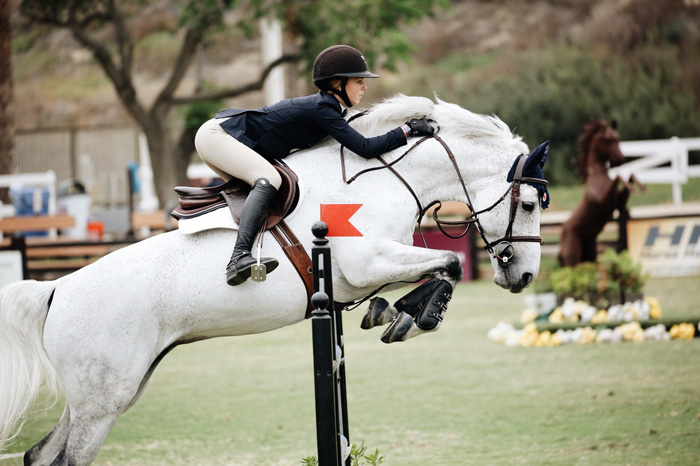
Equestrian show jumping demonstrates the athletic partnership between horse and rider
Horse Racing Sports
Horse racing is one of the oldest organized sports, with evidence of competitive horse racing dating back to ancient civilizations. Modern racing encompasses multiple disciplines, from flat racing to steeplechase, and remains one of the most popular spectator sports worldwide.
💡 Pro Tip: When attending horse racing events, arrive early to watch the horses warm up in the paddock. This gives you insight into their condition and temperament before placing any wagers.
- Horse Racing (General) — equestrian sport that involves jockeys riding horses or being pulled along by horses.
- Thoroughbred Racing — horse racing sport that involves the racing of thoroughbred horses.
- Steeplechase — a horse racing sport in which competitors on horsebacks race on a long-distance course that has several types of obstacles.
Horse Pulling Sports
These traditional sports showcase the power and endurance of draft horses, with competitions testing both the animals' strength and the drivers' skill in guiding them through various challenges.
- Carriage Driving — sports in which horses or ponies are hitched to a wagon, carriage, cart or sleigh by means of a harness.
- Harness Racing — horses trot or pace while pulling a driver in a sulky.
- Combined Driving — a driver on a carriage pulled by horses takes part in three events: dressage, marathon and cones.
- Pleasure Driving — a horse and carriage sport judged on a horse's manners, performance, quality and conformation.
- Chuckwagon Racing — a chuckwagon is pulled by four thoroughbred horses around a track.
- Scurry Driving — ponies pull a carriage with two riders around a track.
- Skijøring — being pulled either by a dog, a horse or a motor-operated vehicle while on skis.
- Horse Pulling — one or two horses harnessed to a weighted sled pull for the greatest distance.
- Chariot Racing — horses pull along a driver riding a chariot (extinct sport).
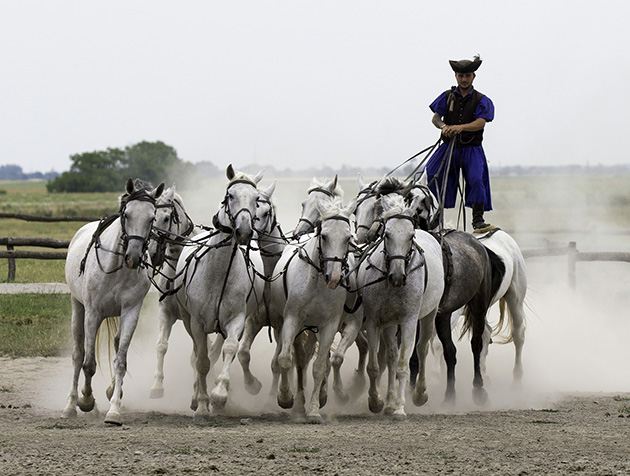
Puszta horse show demonstrating traditional Hungarian riding skills
Rodeo Type Sports on Horseback
Originating from the working practices of cattle herding in Spain and Mexico, rodeo sports have evolved into exciting competitive events that test the skills cowboys and cowgirls developed during ranch work. These events remain popular throughout North and South America.
“Rodeo isn’t just a sport — it’s a battle of balance, courage, and heart. You can’t bluff your way through eight seconds on a bull.”
— Chris LeDoux, world-champion bareback rider and country artist
- Barrel Racing — a rodeo event where participants and horses complete a clover-leaf pattern around barrels.
- Chilean Rodeo — two riders on horseback try to stop a calf.
- Cutting — an American western style sport of the equestrian discipline in which the objective for a rider on a horseback is to separate a few cows from its herd and prevent it from returning.
- Campdrafting — a sport from Australia where a rider on horseback attempts to cut out a cattle from its herd and drive it into a pen.
- Roping — a rodeo event where calves or cows are caught by throwing around it a rope with a loop as quickly as possible.
- Tent Pegging — the objective for a horse rider is to pierce, pick-up and carry a target, with a lance or a sword, as they gallop towards the target.
- Team Penning — the objective for each three-rider team on horseback is to separate three specific cattle from a herd.
- Toros Coleados — involves chasing down a bull while riding on horseback (also called Bull-Tailing).
💡 Pro Tip: For those interested in starting rodeo sports, begin with ground training and cattle work on foot before progressing to mounted events. Building a strong foundation in animal handling is essential for safety and success.
Other Sports on Horseback
Beyond the major categories, numerous specialized horse sports exist, ranging from mounted shooting competitions to historical reenactments. These activities demonstrate the versatility of equestrian sports and their deep cultural connections across different societies.
- Cowboy Mounted Shooting — involves shooting at targets while riding a horse.
- Horseback Archery — shooting arrows at targets while riding a horse (not common)
- Equestrian Fencing — sword fighting on horseback (extinct)
- Mounted Orienteering — participants navigate from start to end through control points, usually on horseback.
- Jousting — competitors on horsebacks with long lances try to knock each other down (historical sport)
- Quintain — competitors on horsebacks with long lances try to hit a stationary object hanging from a pole (historical sport)
- Horseback Boxing — competitors fight each other while riding on the back of a horse. (unusual historical sport)
Other Horse Related Sports
Some sports involve horses indirectly or simulate equestrian activities without actual horses, yet still maintain connections to equestrian traditions and culture.
- Horseshoes — players toss horseshoes at stakes in the ground.
- Hobby Horsing — participants simulate traditional equestrian events while riding a simple object resembling a horse's head mounted on a stick.
Frequently Asked Questions
What are the main types of horse sports?
The main categories of horse sports include team sports on horseback like polo, equestrian disciplines like dressage and show jumping, horse racing sports including thoroughbred and steeplechase racing, horse pulling sports like harness racing, and rodeo events like barrel racing and roping. Each category has numerous specialized variations and regional interpretations.
What is the difference between polo and horse racing?
Polo is a team sport where players on horseback use mallets to hit a ball into a goal, similar to field hockey on horses. Horse racing involves jockeys racing horses against each other over a set distance, competing for the fastest time. Polo requires ball handling skills and team coordination, while racing focuses purely on speed and requires different riding techniques and horse breeds.
What are the three main equestrian Olympic events?
The three main Olympic equestrian disciplines are dressage (performing predetermined movements from memory), show jumping (clearing obstacles within a time limit), and eventing (a combination of dressage, cross-country, and show jumping in a single competition). These are the only Olympic sports where men and women compete directly against each other on equal terms.
Are horse sports dangerous?
Horse sports carry inherent risks due to the size and power of horses, the speed of many events, and the potential for falls. However, with proper training, safety equipment like helmets and protective vests, and following established safety protocols, many participants enjoy these sports safely for years. Risk levels vary significantly between disciplines, with eventing and racing generally considered more dangerous than dressage or pleasure riding.
What equipment is needed for horseback riding sports?
Essential equipment includes a properly fitted helmet, riding boots with heels, and appropriate clothing. Depending on the discipline, you may also need a saddle, bridle, reins, riding gloves, and protective vests. Competition-specific sports like polo require additional specialized equipment such as mallets and protective gear, while racing requires lightweight saddles and special clothing.
Can beginners participate in horse sports?
Yes, many horse sports welcome beginners through lessons and progressive training programs. Start with basic riding lessons to develop proper technique, balance, and horse handling skills. Many facilities offer beginner-friendly disciplines like trail riding, basic dressage, and recreational polo. Always work with certified instructors and use appropriate safety equipment during the learning process.
How much does it cost to participate in horse sports?
Costs vary widely depending on the sport and level of involvement. Lesson programs typically range from $30-100 per hour. Owning a horse involves monthly costs of $300-1,000+ for boarding, feed, veterinary care, and farrier services. Equipment costs range from a few hundred dollars for basic gear to several thousand for specialized competition equipment. Many participants start with lesson programs at riding schools before deciding to own their own horse.
References
- Fédération Équestre Internationale (FEI). (2024). "Equestrian Disciplines and Rules." FEI Official Website.
- United States Polo Association. (2024). "History and Rules of Polo." USPA Publications.
- International Olympic Committee. (2024). "Equestrian Sports at the Olympic Games." Olympic.org.
- Professional Rodeo Cowboys Association. (2024). "Rodeo Events and Regulations." PRCA Official Guide.
- British Horse Society. (2023). "Safety in Equestrian Sports." BHS Safety Guidelines.
- World Horse Racing Association. (2024). "Types of Horse Racing Worldwide." WHRA Publications.
- United States Equestrian Federation. (2024). "Discipline Resources and Competition Rules." USEF.org.
Related Pages
Equestrian Sports
Explore Olympic equestrian disciplines including dressage, show jumping, and eventing with detailed competition information and training resources.
Learn More →Man vs. Horse Marathon
Discover this unique endurance event where runners compete directly against horse riders over long distances in challenging terrain.
Learn More →Complete List of Sports
Browse our comprehensive directory of sports from around the world, covering traditional, modern, and unusual athletic activities.
Learn More →Unusual Sports Involving Animals
Explore unusual and unique sports featuring various animals, from camel racing to elephant polo and beyond.
Learn More →