Women's Rugby World Cup
Quick Answer
The Women's Rugby World Cup has been held every four years since 1991, with New Zealand dominating the competition. England won the most recent tournament in 2025, defeating Canada 33-13 in the final.
- New Zealand has won 6 out of 10 tournaments (60% success rate)
- England has claimed 3 titles, including the 2025 championship
- The tournament has grown from unofficial beginnings to full IRB backing in 1998
Women's Rugby is very popular in many of the rugby-playing countries around the world. The first Women's Rugby World Cup was held in 1991, and it has been held every four years since.
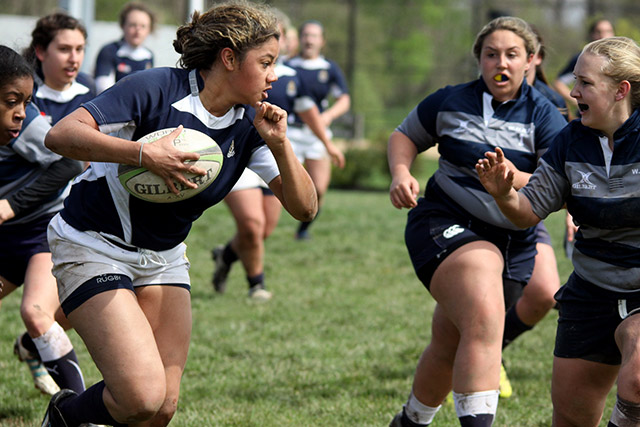
Women's rugby game in action
The tournaments in 1991 and 1994 were not officially sanctioned by the IRB - it was not until the 1998 tournament that it received official IRB backing. After being runners-up for three years running, England triumphed in 2014 for their second Championship.
New Zealand won the 2017 World Cup, their 5th title. The next tournament was planned to be held in 2021 in New Zealand, the first time the event as ever been held in the Southern Hemisphere. The event was postponed until 2022 due to the ongoing pandemic.
The format of the World Cup changed for the 2022 World Cup, with classification matches replaced with quarter-finals. Host nation New Zealand defeated England again in the final in 2022. New Zealand has now won 6 of the 10 tournaments so far.
“This tournament has shown that women and girls can be anything, do anything and belong anywhere – in rugby, in sport and in society.”
— Sarah Massey, Managing Director, Women’s Rugby World Cup 2025
Results
Frequently Asked Questions
Who won the most recent Women's Rugby World Cup?
England won the 2025 Women's Rugby World Cup, defeating Canada 33-13 in the final. This was England's third World Cup title and their first victory on home soil.
Which country has won the most Women's Rugby World Cups?
New Zealand has won the most Women's Rugby World Cups with 6 titles out of 10 tournaments. They have dominated the competition since their first victory in 1998, winning 60% of all tournaments held.
When did the Women's Rugby World Cup become officially recognized?
The Women's Rugby World Cup received official IRB (International Rugby Board) backing in 1998. The tournaments in 1991 and 1994 were held without official sanctioning but are now recognized as part of the tournament's history.
How often is the Women's Rugby World Cup held?
The Women's Rugby World Cup is held every four years, following the same cycle as the men's tournament. The only exception was the 2022 tournament, which was postponed by one year due to the COVID-19 pandemic.
Where will the next Women's Rugby World Cup be held?
The 2029 Women's Rugby World Cup will be held in Australia, marking the second time the tournament will be hosted in the Southern Hemisphere. The 2033 tournament is scheduled to take place in the USA.
Which teams have reached the most World Cup finals?
England has reached the most finals with 10 appearances, though they've won only 3 titles. New Zealand has reached 6 finals and won all of them, demonstrating remarkable efficiency in championship matches.
References
- World Rugby. (2025). "Women's Rugby World Cup History and Statistics." World Rugby Official Website.
- Wood, R.J. (2025). "Analysis of Women's Rugby World Cup Trends 1991-2025." Topend Sports Database.
- England Rugby. (2025). "England Women Win 2025 Rugby World Cup." England Rugby Official Reports.
- New Zealand Rugby. (2022). "Black Ferns World Cup Victory at Eden Park." New Zealand Rugby Archives.
- International Rugby Board. (1998). "Official Recognition of Women's Rugby World Cup." IRB Historical Documents.
- Rugby World Cup Limited. (2025). "Tournament Format and Evolution 1991-2025." RWCL Publications.
Related Pages
Rugby World Cup (Men)
Complete history and results of the men's Rugby World Cup tournament.
Learn More →International Rugby Tournaments
Overview of major international rugby competitions and championships.
Learn More →Women in Sport
Resources and information about women's participation in various sports.
Learn More → Any comments, suggestions, or corrections? Please let us know.