Bent-Arm Hang Test Calculator
Quick Answer
This calculator scores your bent-arm hang test performance using Eurofit normative data from nearly 3 million test results across 30 countries. Enter your hang time, age, and sex to receive your percentile ranking and training recommendations.
- Calculates percentile ranking compared to age and sex peers
- Based on Tomkinson et al. (2017) European normative values
- Provides sport-specific applications and training guidance
The bent-arm hang test measures upper body relative strength and muscular endurance. This test, part of the Eurofit Assessment Battery, evaluates how long you can maintain a flexed-arm position with your chin above a horizontal bar. It is commonly called the Flexed-Arm Hang and is widely used in schools, military fitness testing, and athletic assessments.
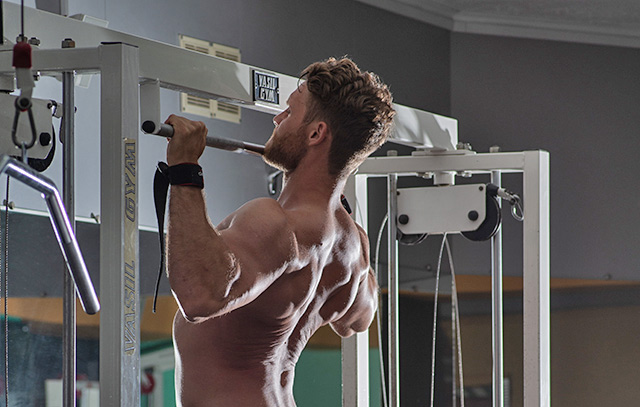
Performing the bent-arm hang test
How to Use This Calculator
Follow these steps to accurately score your bent-arm hang test performance:
- Perform the Test: Using the protocol described below, complete the bent-arm hang test and record your time in seconds.
- Enter Your Data: Input your hang time (to the nearest 0.1 seconds), age, and sex into the calculator above.
- Get Your Results: Click "Calculate My Score" to receive your percentile ranking, performance category, and personalized training recommendations.
- Track Progress: Save or print your results and retest every 4-8 weeks to monitor improvement.
Bent-Arm Hang Test Procedure
Purpose: To measure upper body relative strength and muscular endurance of the elbow flexors (biceps) and shoulder extensors (latissimus dorsi).
Equipment Required: Stopwatch, an elevated horizontal bar at appropriate height, optional step or stool for positioning.
Pre-Test Preparation: Explain test procedures to the subject. Perform screening of health risks and obtain informed consent. Record basic information including age, height, body weight, gender, and test conditions. Complete an appropriate warm-up including arm circles and light stretching. See more details of pre-test procedures.
Test Procedure:
- The subject is assisted into position with the body lifted so the chin is level with the horizontal bar
- Grasp the bar using an overhand grip (palms facing away) with hands shoulder-width apart
- Timing begins when the subject is released and holding independently
- Maintain position for as long as possible without swinging, kicking, or tilting the head backward
- Timing stops when the chin drops below bar level or head tilts backward
Scoring: The total time held in seconds is recorded. This calculator converts your time to a percentile ranking based on European normative data.
Understanding Your Bent-Arm Hang Results
Your bent-arm hang performance indicates your relative upper body strength—the ability to support your body weight using your arms and back muscles. Unlike tests measuring absolute strength (like maximum grip force), the bent-arm hang factors in body composition, making it particularly valuable for assessing functional fitness.
Performance Categories
| Percentile Range | Category | What It Means |
|---|---|---|
| 95th+ | Elite | Top 5% - exceptional upper body endurance |
| 85th-94th | Excellent | Well above average - strong athletic foundation |
| 70th-84th | Good | Above average - solid strength base |
| 40th-69th | Average | Typical for age and sex |
| 20th-39th | Below Average | Room for improvement |
| Below 20th | Needs Improvement | Focus on strength development |
Eurofit Normative Data
The scoring in this calculator is based on the landmark study by Tomkinson et al. (2017), which analyzed 2,779,165 Eurofit bent-arm hang performances from children and adolescents aged 9-17 years across 30 European countries. This provides the most comprehensive and geographically representative normative data available.
Average Bent-Arm Hang Times by Age (50th Percentile)
| Age | Boys (seconds) | Girls (seconds) |
|---|---|---|
| 9 | 10 | 8 |
| 10 | 13 | 9 |
| 11 | 18 | 11 |
| 12 | 23 | 12 |
| 13 | 28 | 14 |
| 14 | 34 | 14 |
| 15 | 38 | 15 |
| 16 | 42 | 15 |
| 17 | 44 | 16 |
Adult norms in the calculator are extrapolated from research data and military fitness standards, including the U.S. Marine Corps Physical Fitness Test which requires a minimum of 15 seconds for passing and awards maximum points at 70 seconds.
Sport-Specific Applications
The bent-arm hang is particularly relevant for sports requiring sustained grip and upper body endurance:
Rock Climbing & Bouldering
Climbers rely heavily on isometric upper body strength. Elite climbers typically achieve 60+ seconds on bent-arm hang tests, with finger strength being even more specialized.
Gymnastics
Events like rings, parallel bars, and high bar require exceptional bent-arm holding strength. Gymnasts train specifically for isometric endurance.
Combat Sports
Wrestling, judo, and MMA require grip endurance for clinching and grappling. The bent-arm hang correlates with competitive performance in these sports.
Military & Law Enforcement
The flexed-arm hang is used in fitness testing for Marines, police, and firefighters. It simulates holding positions during climbing and rescue operations.
How to Improve Your Bent-Arm Hang Time
Improving your bent-arm hang requires training both muscular strength and endurance. Here's a progressive approach:
Beginner Program (Currently Under 15 Seconds)
- Practice dead hangs (straight arms) for 20-30 seconds, 3 sets, 3x per week
- Perform lat pulldowns at 60% of max for 3 sets of 15 reps
- Include band-assisted flexed hangs to build time under tension
- Add bicep curls and inverted rows for supporting muscle development
Intermediate Program (15-40 Seconds)
- Practice timed flexed hangs at 75% of max time for 5-6 sets
- Incorporate negative pull-ups: 5-second controlled lowering
- Add weighted dead hangs with 5-10kg to build grip strength
- Train 3x weekly with 48+ hours between sessions
Advanced Program (40+ Seconds)
- Progress to one-arm dead hang training
- Use varied grip positions: wide, narrow, neutral grips
- Add isometric holds at different angles (90°, 120°, full flexion)
- Incorporate weighted chin-ups for overall pulling strength
Test Reliability and Validity
Research demonstrates the bent-arm hang test has excellent reliability with intraclass correlation coefficients (ICC) ranging from 0.89 to 0.99, meaning repeated tests produce consistent results. The test shows moderate to high correlation with relative isometric strength (r = 0.72), validating its use as an indicator of upper body muscular fitness.
Studies by Clemons et al. (2014) found that the 90° modified flexed-arm hang correlates strongly with relative isometric strength measured by maximum voluntary isometric contraction. This confirms the test measures what it claims to measure: the ability to support body weight through isometric muscle action.
Advantages and Disadvantages
Advantages: Equipment is readily available in most gyms and schools. The test is easy and quick to perform, requiring minimal setup. Results are intuitive—longer times equal better performance.
Disadvantages: Body weight significantly affects results, potentially disadvantaging heavier individuals regardless of absolute strength. For those concerned about body weight influence, the push-up test provides an alternative upper body assessment.
Additional Considerations: This test is often used for children who cannot perform multiple chin-ups, providing an accessible assessment of upper body fitness. For modified options, consider the modified pull-up (horizontal) or the extended-arm hang test for grip endurance.
The Test in Action
- This test is part of the Eurofit Assessment Battery
- Used in the U.S. Marine Corps Physical Fitness Test (for female Marines)
- Included in the President's Challenge Fitness Awards program
- Part of the International Physical Fitness Test protocol
Frequently Asked Questions
What is a good bent-arm hang time?
A good bent-arm hang time depends on age and sex. For adult males, 45+ seconds (above 50th percentile) is good, while 70+ seconds is excellent. For adult females, 25+ seconds is good, and 50+ seconds is excellent. Youth standards vary by age—use the calculator above for precise percentile rankings.
How can I improve my bent-arm hang time?
Practice the flexed-arm hang 3x weekly at 75% of your max time. Include supporting exercises: lat pulldowns, bicep curls, and negative pull-ups. Most athletes improve 20-30% within 8-12 weeks with consistent training. Progressive overload is key—gradually increase hold times or add weight.
What muscles does the bent-arm hang test?
The bent-arm hang primarily tests the muscular endurance of elbow flexors (biceps brachii, brachialis, brachioradialis) and shoulder extensors (latissimus dorsi, teres major). Secondary muscles include forearm flexors for grip, rhomboids and middle trapezius for scapular stability, and core muscles for body control.
Is bent-arm hang better than pull-ups for testing strength?
They measure different qualities. The bent-arm hang measures isometric endurance (holding a static position), while pull-ups measure dynamic strength (moving body weight through a range of motion). The bent-arm hang is more accessible for beginners and children, while pull-ups better assess functional pulling strength.
What grip should I use for the bent-arm hang?
The Eurofit protocol requires an overhand (pronated) grip with hands shoulder-width apart. Some protocols allow underhand grip, which typically allows longer times by emphasizing the biceps more. For standardized testing and comparison to norms, use the overhand grip unless otherwise specified.
How often should I test my bent-arm hang?
Test every 4-8 weeks to track progress without overtraining. More frequent testing can be demotivating if improvements aren't visible. Ensure consistent conditions: same time of day, similar rest beforehand, identical bar setup. Document results to monitor long-term trends.
Why do heavier people score lower on the bent-arm hang?
The bent-arm hang measures relative strength—the ratio of upper body strength to body weight. Heavier individuals must support more weight, which exhausts muscles faster even if absolute strength is high. This is why the test correlates with body composition and is sometimes criticized for disadvantaging larger athletes.
References
- Tomkinson, G.R., Carver, K.D., Atkinson, F., et al. (2017). "European normative values for physical fitness in children and adolescents aged 9–17 years: results from 2,779,165 Eurofit performances representing 30 countries." British Journal of Sports Medicine, 52: 1445-1456.
- Clemons, J.M. (2014). "Construct validity of a modification of the flexed arm hang test." Journal of Strength and Conditioning Research, 28(12): 3523-3530.
- Council of Europe. (1988). Eurofit: Handbook for the Eurofit Tests of Physical Fitness. Rome: Council of Europe.
- Winnick, J.P. & Short, F.X. (2014). The Brockport Physical Fitness Test Manual. 2nd Ed. Champaign, IL: Human Kinetics.
- Clemons, J.M., Campbell, B., Jeansonne, C. (2004). "Relationships between the flexed-arm hang and select measures of muscular fitness." Journal of Strength and Conditioning Research, 18(3): 508-512.
- Kolimechkov, S., et al. (2019). "Physical fitness assessment in children and adolescents: A systematic review of reliability studies." Sustainability, 11(21): 5985.
Similar Tests
- Flexed-arm hang test from the President's Challenge Fitness Awards
- Flexed-arm hang used for the International Physical Fitness Test
- Flexed-arm hang test used for the Marines
- Extended (straight) arm hang test for grip endurance
- Other upper body strength tests: pull-up and push-up tests
Related Pages
Grip Types Explained
Overhand, underhand, and neutral grips affect which muscles are emphasized during hanging exercises.
Learn More →Other Strength Tests
Compare your bent-arm hang with other upper body assessments for comprehensive fitness profiling.
View Tests →Eurofit Testing Battery
Learn about all nine tests in the complete Eurofit fitness assessment protocol.
Explore Eurofit → Any comments, suggestions, or corrections? Please let us know.