Egg-and-Spoon Race
An egg-and-spoon race is a fun race which most school children in several countries around the world would have taken part in. In the egg-and-spoon race, participants run while carrying an egg balanced on the end of a spoon. Such races originated in the end of the 19th century in the United Kingdom.
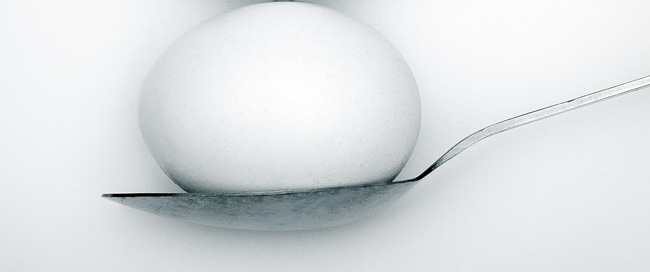 egg and spoon
Egg-and spoon races are conducted for various distances based on the organization that conducts the race. The most commonly used is the 50m and the 100m formats.
The objective of the race is very simple, to carry an egg on the spoon and cross the finish line as fast as possible. Each competitor is provided with a spoon and an egg. At the starting line, all competitors line up with the eggs positioned on the spoon, and wait for the start signal.
When the start signal is set off, competitors run at full speed, holding the spoon with just one hand. Holding the spoon with two hands, or touching the egg with hands is not allowed. If a competitor drops the egg, they have to pick it up, put it back onto the spoon and balance it before they can resume running.
Though mostly eggs are used for races, it has also been replaced in some instances with potatoes, tomatoes, lemons or synthetic eggs. A boiled egg is sometimes used too.
Related Pages
- Egg Rolling — an Easter tradition where children push an egg through the grass with a long-handled spoon
- Complete list of unusual sports
- Videos of unusual sports
 Any comments, suggestions, or corrections? Please let us know.