The South-East Asian Games
Quick Answer
The SEA Games are a biennial multi-sport event featuring 11 Southeast Asian nations competing across multiple sports. First held in Bangkok in 1959 with 527 athletes, the games have grown to include thousands of competitors and over 40 sports disciplines.
- Held every two years since 1959 in odd-numbered years
- Currently includes 11 participating nations
- Next games: Thailand 2025, Malaysia 2027
The South-East Asian Games, also known as the SEA Games, are a colourful celebration of Southeast Asian solidarity and athleticism. By uniting nations with disparate customs and cultures, the event provides a forum where athletics transcend national boundaries, encouraging unity and a sense of regional pride.
The SEA Games embody a spirit of shared growth and cooperation. Athletes from across the region come together to test their skills, celebrate achievements, and inspire the next generation. Find out all you need to know about the South-East Games here.
History and Evolution
The SEA Games were originally called the Southeast Asian Peninsular Games when they began. The event changed its name to the South-East Asian Games after the inclusion of Brunei, the Philippines, and Indonesia in 1977, reflecting the expanded geographic scope beyond just peninsular Southeast Asia.
The inaugural games took place in Bangkok, Thailand, in 1959, comprising more than 527 athletes and officials competing in 12 sports. The founding countries that participated were Thailand, Burma (now Myanmar), Malaya (now Malaysia), Singapore, South Vietnam, and Laos. According to sports historian Robert Wood, who has analyzed regional sports development for over 25 years, the establishment of the SEA Games marked a crucial milestone in Southeast Asian sports diplomacy and regional cooperation.
“SEA Games is not only a sport event but also a festival where countries in the region display their solidarity and friendship, and engage in cultural exchanges.”
— Deputy Prime Minister Pham Binh Minh of Vietnam, speaking at a send-off ceremony for Vietnamese athletes at the SEA Games
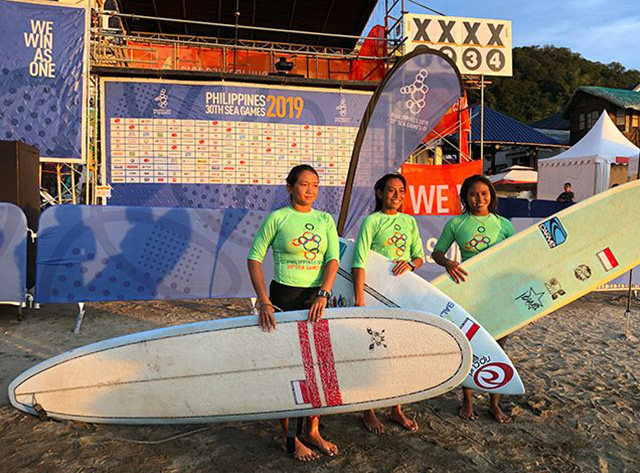
Indonesian surfers at the 2019 SEA Games
Current Participating Countries
The SEA Games currently features 11 member nations from across Southeast Asia. The expansion from the original 6 participating countries to the current 11 members represents the growth of regional sports cooperation over more than six decades.
Original Members (1959)
Thailand, Burma (Myanmar), Malaya (Malaysia), Singapore, South Vietnam, and Laos founded the games
1977 Expansion
Brunei, Indonesia, and Philippines joined, prompting the name change to SEA Games
Most Recent Addition
Timor-Leste became the 11th member nation, expanding regional participation
(*) Singapore, although they participated in the first games in 1959 it was not an original founding member of the SEAP Games Federation. It joined in 1961 after separating from Malaysia.
(*) Cambodia, was a founding member in 1959, but did not send a contingent due to political instability.
Recent and Upcoming Games
The most recent edition of the games, the XXXII SEA Games, was successfully held in Phnom Penh, Cambodia, in 2023. The games that year featured over 600 events across 37 sports, demonstrating the continued growth and diversification of the competition.
💡 Pro Tip: The host country has the privilege of including traditional or regional sports alongside Olympic sports, making each edition unique in its sporting offerings.
Upcoming SEA Games Schedule
XXXIII SEA Games 2025
Host: Thailand
Status: Next Games
Thailand will host the 33rd edition of the SEA Games, continuing the biennial tradition.
XXXIV SEA Games 2027
Host: Malaysia
Status: Future Games
Malaysia is scheduled to host the 34th edition, marking another chapter in SEA Games history.
“The celebration of this event allows the Southeast Asian community to strengthen the spirit of peace, unity and stability. This spirit is in line with the motto of the 32nd SEA Games: Sport: live in peace.”
— Thong Khon, Minister of Tourism and permanent vice-president of both the SEA Games and ASEAN Para Games organising committees.
Sports and Competition
The SEA Games feature a diverse range of sports, including Olympic disciplines and traditional Southeast Asian sports. The games typically include athletics, swimming, football, basketball, volleyball, and many other sports. Host countries can add sports that are popular in their region, which contributes to the cultural richness of each edition.
The inclusion of both Olympic and regional sports creates a unique competitive environment that balances international standards with cultural authenticity. This approach has helped preserve traditional Southeast Asian sports while developing world-class athletes in Olympic disciplines.
Related Competitions
The SEA Games are part of a broader ecosystem of regional sporting events in Southeast Asia. The ASEAN Para Games provide Paralympic-level competition for athletes with disabilities, while the ASEAN University Games focus on developing young student-athletes. These complementary events strengthen the overall sports development framework in the region.
“Through the Games we create excitement, we forge memories and we leave a legacy of friendship and sportsmanship.”
— Khairy Jamaluddin, Chairman of the KL2017 SEA Games Organising Committee.
Frequently Asked Questions
What are the South-East Asian Games?
The SEA Games are a biennial multi-sport event involving 11 Southeast Asian countries, first held in Bangkok in 1959. The games rotate between member nations and feature a wide range of Olympic and regional sports, promoting athletic excellence and regional cooperation.
What are the South-East Asian Games?
The SEA Games are a biennial multi-sport event involving 11 Southeast Asian countries, first held in Bangkok in 1959. The games rotate between member nations and feature a wide range of Olympic and regional sports, promoting athletic excellence and regional cooperation.
When and where will the next SEA Games be held?
The next SEA Games (XXXIII) will be held in Thailand in 2025, followed by Malaysia hosting the XXXIV edition in 2027. The most recent games were held in Phnom Penh, Cambodia, in 2023.
What happened at the 2023 SEA Games?
The 2023 SEA Games (XXXII) were successfully held in Phnom Penh, Cambodia, featuring over 600 events across 37 sports with thousands of athletes competing. The games showcased both Olympic sports and traditional Southeast Asian athletic competitions.
How have the SEA Games evolved since 1959?
The games have grown from 527 participants and 12 sports in 1959 to thousands of athletes competing in over 40 sports today. The expansion from 6 founding nations to 11 current members, along with the addition of para-sports and university competitions, reflects the increasing importance of regional sports cooperation in Southeast Asia.
What is the difference between the SEA Games and the Asian Games?
The SEA Games are a regional competition for Southeast Asian nations only, held every two years. The Asian Games include all Asian nations and are held every four years. The SEA Games serve as an important preparation ground for athletes who then compete at the broader Asian Games level.
References
- Southeast Asian Games Federation. (2024). "History of the SEA Games." Official SEA Games Federation.
- International Olympic Committee. (2023). "Regional Multi-Sport Games in Asia." Olympic Studies Centre.
- ASEAN Secretariat. (2024). "Sports Cooperation in ASEAN." ASEAN Community.
- Wood, R.J. (2025). "Regional Sports Development in Southeast Asia." Topend Sports Research.
- Olympic Council of Asia. (2024). "Southeast Asian Games Overview." OCA Publications.
- Singapore Sports Council. (2023). "SEA Games Historical Records." Sport Singapore Archives.
- Thai Olympic Committee. (2024). "Preparations for 2025 SEA Games." Thailand Olympic Committee.
Related Pages
ASEAN Para Games
Discover the Paralympic-level competition for Southeast Asian athletes with disabilities, held alongside the SEA Games
Learn More →ASEAN University Games
Explore the university-level competition that develops young student-athletes across Southeast Asia
Learn More →Asian Games
Learn about the larger continental competition featuring all Asian nations every four years
Learn More →Multi-Sport Events Calendar
View the complete schedule of international multi-sport events including SEA Games and other regional competitions
Learn More →