Sumo Demonstrations at the Olympic Games
Sumo is a traditional Japanese wrestling sport where two competitors try to force each other out of a ring. There was a demonstration of sumo wrestling at the 1964 Olympics in Tokyo, as part of the Japanese martial art (budō) exhibition, and another sumo demonstration was planned when the Olympics returned to Tokyo in 2021.
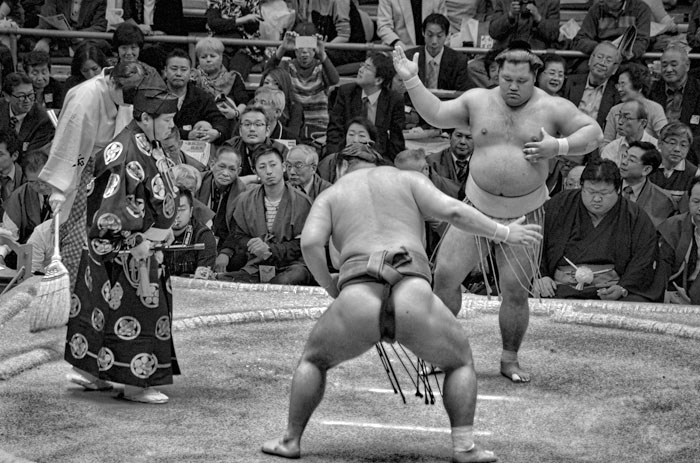 sumo wrestling
There is already two other forms of wrestling on the Olympic Games program, freestyle and Greco-Roman, so we cannot forsee sumo forcing its way onto the program. It is more a cultural demonstration of a local sport to the people visiting Japan.
1964 Sumo Demonstration
In 1964, the demonstration of sumo took place on October 15, 1964 at the Nippon Budokan with nearly 9,000 spectators, on a program that also included demonstrations of archery (kyūdō) and fencing (kendo).
The following is taken from the official Budo Demonstration program from the 1964 Olympic Games.
11.00 SUMO
- Basic Pattern
- Technique
- ButsuKari-Geiko
14.10 SUMO
- Match (Primary & Junior High School)
- Sannin-Nuki (Primary School)
- Sannin-Nuki (Junior High School)
- Match (Senior High School)
- Match (Young Men)
- Gonin-Nuki
- Match (College Students)Match (Adults)
- Gonin-Nuki
2021 Sumo Demonstration
Though not officialy listed as an demonstration sport, the Japan Sumo Association planned to hold a special two-day exhibition sumo tournament in the days after the Olympics as part of the official Olympics cultural festival. However, due to the Olympics being postponed, the event was not held.
Related Pages
- Budo (Japanese martial arts) demonstration at the 1964 Olympics
- About the sport of sumo
- More Olympic Demonstration Sports
- Japan at the Olympic Games
- Sport in Japan
 Any comments, suggestions, or corrections? Please let us know.