Tenpin Bowling
Ten-pin or tenpin bowling, which is commonly referred to as “bowling,” is a sport in which a player rolls a bowling ball on a wooden or synthetic lane to knock down pins. There have been many claims as to where bowling originated, some say it originated in Egypt and some say in Germany.
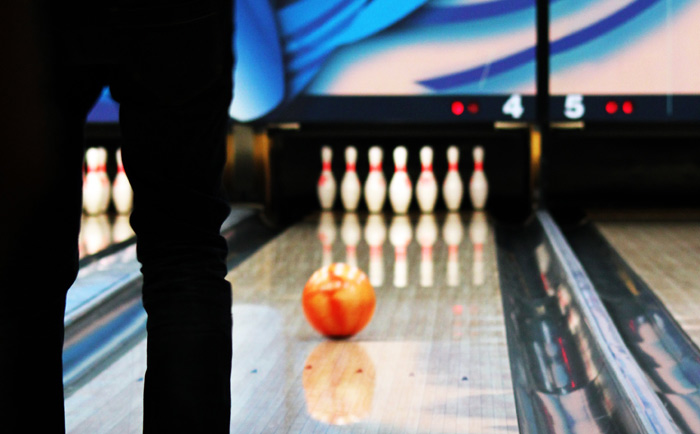 tenpin bowling alley
The wooden lane should be around 105 centimeters wide and 18 meters long. There is a foul line near the bowler, if the bowler crosses the line, it is considered a foul. Each bowler can have one shot at a new rack of ten pins, that is, if the bowler is foul in the first frame.
The bowlers can have 10 frames to knock down the pins. The bowlers are allowed two rolls from frames 1 to 9. The last frame, the tenth, frame, can have up to three rolls.
For scoring, there are three kinds of marks: a strike, when all the ten pins are down during the first ball; spare when all the pins are knocked down by the second ball; and open, when there are still pins standing after the second ball. A bowler can have 10 points when he or she achieves a strike.
Other names for bowling are regular bowling and big-ball bowling. Five-pin bowling, candlepin bowling, and duckpin bowling are other variants of bowling.
Some Bowling Variations
Related Pages
- About the general sports of bowling
- Complete list of sports
- The Encyclopedia of Sports — a list of every sport from around the world.
 Any comments, suggestions, or corrections? Please let us know.