All Summer Olympic Flames
The lighting of an Olympic flame is a practice continued from the ancient Olympic Games. The first time a flame made an appearance at the modern Olympics was in 1928 (maybe in 1912). Originally there was a flame lit at the host city stadium. In 1936, a torch relay was used to transport the flame lit at Olympia in Greece to the Olympic Games host city, where it is kept burning until the closing of the Games.
List of All Olympic Flames/Cauldrons
Stockholm 1912 (Olympiastadion, Stockholm, Sweden): Although it is mostly reported that the first Olympic flame was at the Amsterdam Olympics in 1928, investigations by Bryan Pinkall indicate that the two towers of the stadium in Stockholm 1912 were lit with oil-burning beacons for the duration of the games.
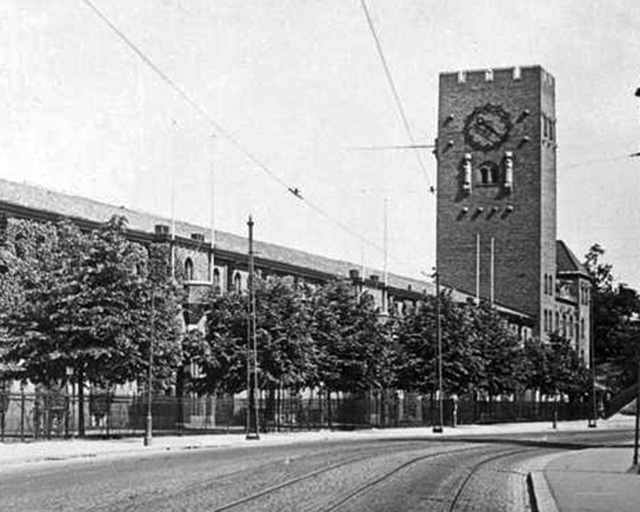 exterior view of Olympiastadion, Stockholm
Amsterdam 1928 (Olympisch Stadion, Amsterdam, Netherlands): The idea of an Olympic Flame burning from the start of the games to the closing was first introduced at the 1928 Olympic Games, where a fire was lit on a tall tower, known as the Marathon tower, looking out over the Olympic Stadium, the venue for the athletics events. There was no torch relay to bring the flame there, that did not come until 1936.
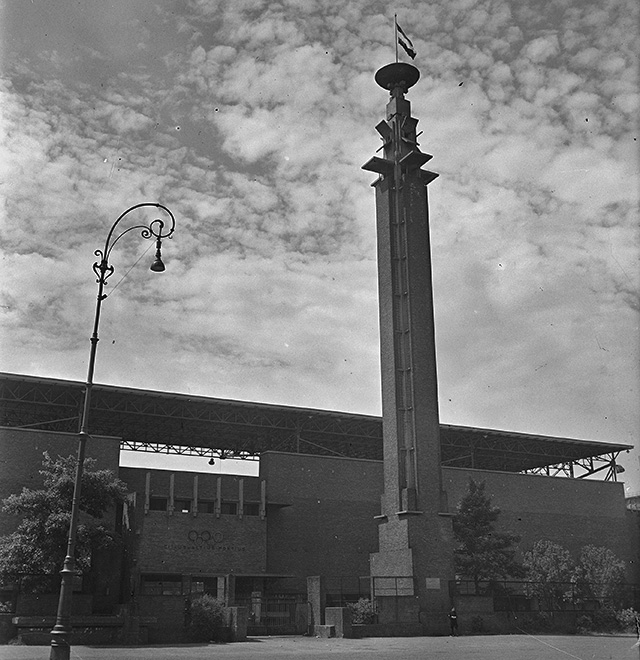 1928 Olympic tower which contained the flame
 Los Angeles 1932 (Los Angeles Memorial Coliseum, Los Angeles, USA): A beacon burned from a cauldron at the top of a tower above the gateway to the Olympic Stadium
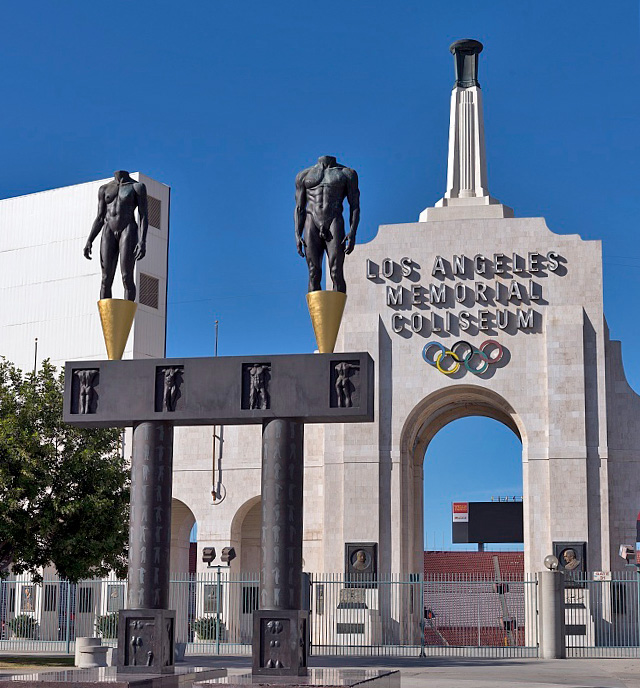 The cauldron was placed atop a tower at the top of the gateway to the 1932 Olympic Stadium
 Berlin 1936 (Olympiastadion, Berlin, Germany): The cauldron was situated atop a stone block at one end of the stadium in Berlin. 1936 was the first year that the flame was carried from Olympia to the host city. The first athlete to light the Olympic Flame was German middle-distance runner Fritz Schligen.
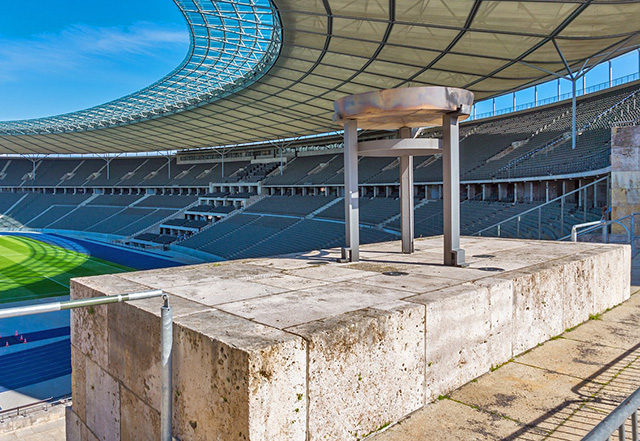 The Olympic Cauldron of the 1936 Olympics at the Olympiastadion in Berlin, Germany
 London 1948 (Wembley Stadium, London, UK): A modest cauldron sat atop a simple pedestal, featuring a single, steady flame, signaling the post-World War II era of rebuilding and renewal.
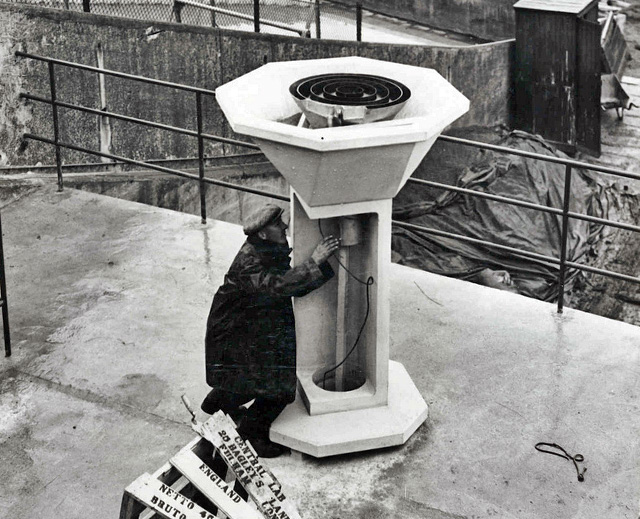 1948 Olympic flame
 Helsinki 1952 (Helsinki Olympic Stadium, Helsinki, Finland): The first cauldron, a simple bowl atop five supporting pillars located in the stadium, was lit by athletics legend Paavo Nurmi. There was also another cauldron, a beacon at the top of the stadium tower, lit by Hannes Kolemainen
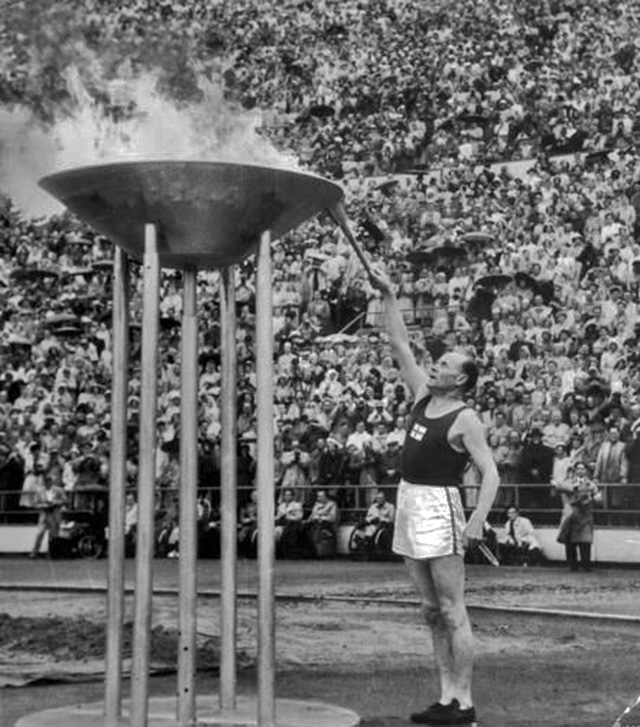 Paavo Nurmi lights the fire at the Olympic games in Helsinki 1952.
 Melbourne 1956 (Melbourne Cricket Ground, Melbourne, Australia): A large shallow dish on top of a cylinder with a wide base, painted with gold-bronze paint. It is about 2m tall. The cauldron is now on display at the Australian Sports Museum after going missing for 30 years. The torchbearer for the 1956 Olympics was a virtually unknown 19-year-old at the time he carried final the torch into the stadium. Ron Clarke went on to become one of the world's finest distance runners in the 1960s.
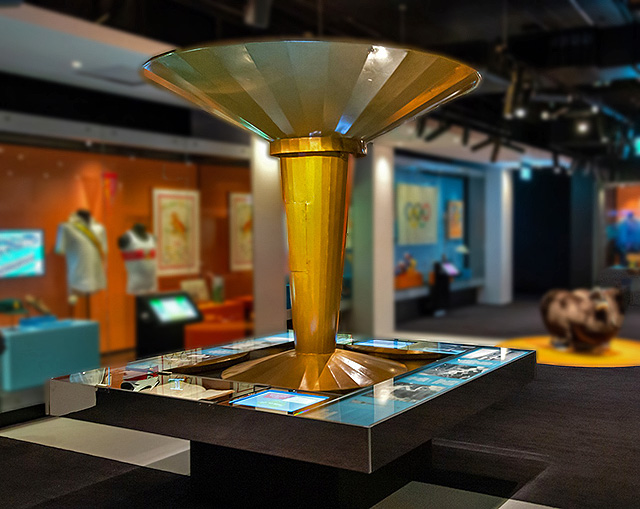 1956 Cauldron
 Stockholm 1956 (Olympiastadion, Stockholm, Sweden): The equestrian events for the 1956 Olympics were held in Stockholm due to restrictive quarantine laws in Australia. Like in Melbourne, a flame was brought from Olympia in Greece, there was a lighting ceremony and a flame left burning for the duration of the competition at the stadium. Swedish equestrian Hans Wikne entered the stadium on horseback and lit the cauldron. From there the fire was carried from the brazier by two runners to the top of the two stadium towers where beacons were lit.
Rome 1960 (Stadio Olimpico, Rome, Italy): A simple majestic cauldron placed atop a grand pedestal and supported by three thin pillars.
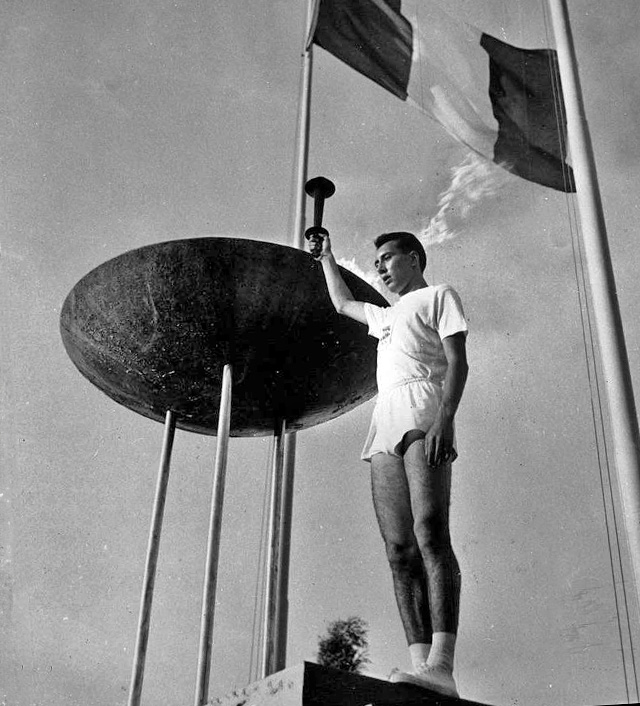 1960 Rome Cauldron
 Tokyo 1964 (National Stadium, Tokyo, Japan): A large inverted cone shaped cauldron. The Japanese torchbearer who lit the flame at Tokyo in 1964, Yoshinori Sakai, was born in Hiroshima on August 6, 1945, the day the atomic bomb was dropped.
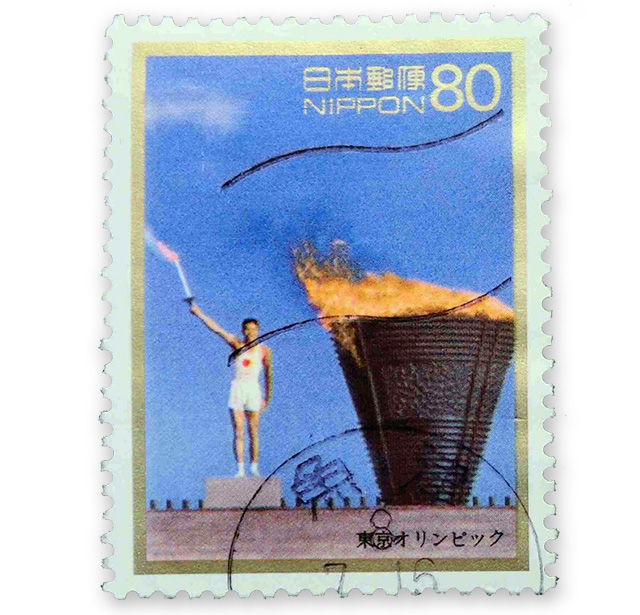 1964 Tokyo Cauldron depicted on a Japanese postage stamp
Mexico City 1968 (Estadio Olímpico Universitario, Mexico City, Mexico): A large circular cauldron, placed on an agle, was situated at the top of a long stairway leading to the rim of the stadium. Enriqueta Basilio became the first woman to light the Olympic Cauldron at the Olympic Games in Mexico City.
Munich 1972 (Olympiastadion, Munich, West Germany): A futuristic cauldron placed atop a sleek tall tower. The ring was two meters in diameter, the burner was set on a four-meter-high column made of pipe.
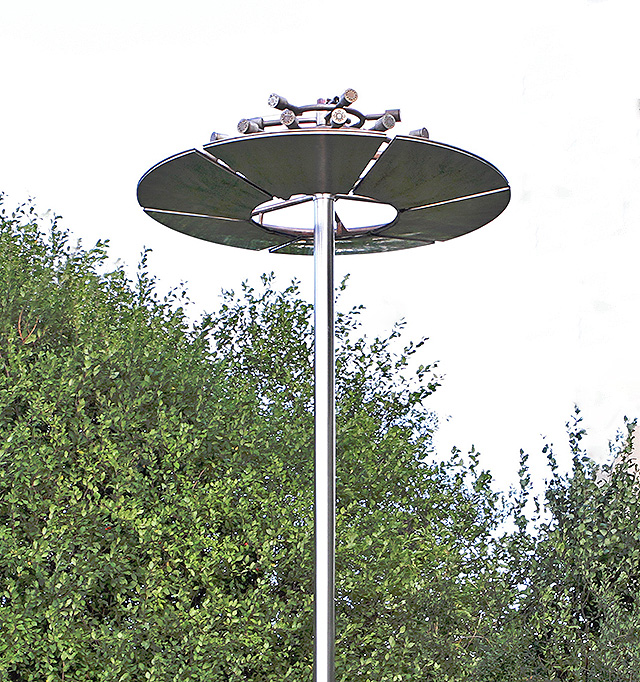 1972 Munich cauldron
 Montreal 1976 (Olympic Stadium, Montreal, Canada): The simple bowl cauldron sat on top of a tall single metal pipe. After a rainstorm put out the Olympic flame during the 1976 Games in Montreal, a well-intended official quickly re-lit it with his cigarette lighter. It was quickly put out again and correctly re-lit it with a backup torch lit from the original flame.
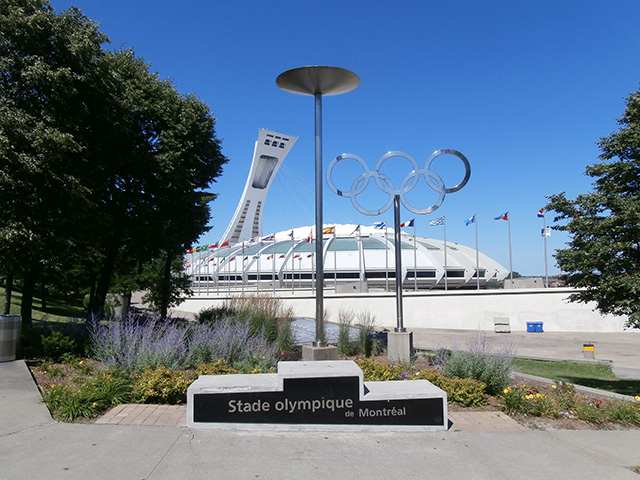 the Olympic cauldron in Montreal on display outside the stadium
 Moscow 1980 (Grand Arena of the Central Lenin Stadium, Moscow, USSR): Te cauldron was a large imposing inverted cone on a solid pilar. The basketball player Sergey Belov lit the cauldron
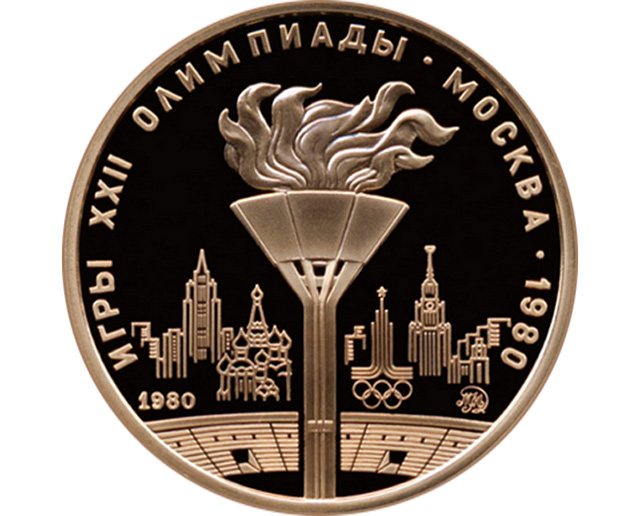 coin depicting the Moscow 1980 Olympic flame
 Los Angeles 1984 (Los Angeles Memorial Coliseum, Los Angeles, USA): The cauldron was the same as used for the 1932 LA Olympics. The cauldron was lit by Rafer Johnson, the 1960 Olympic gold medalist in the decathlon. After climbing the stairs, he lit a wick at the top of the archway, the flame rising up a pipe, through the Olympic Rings, and up the side of the tower to ignite the cauldron.
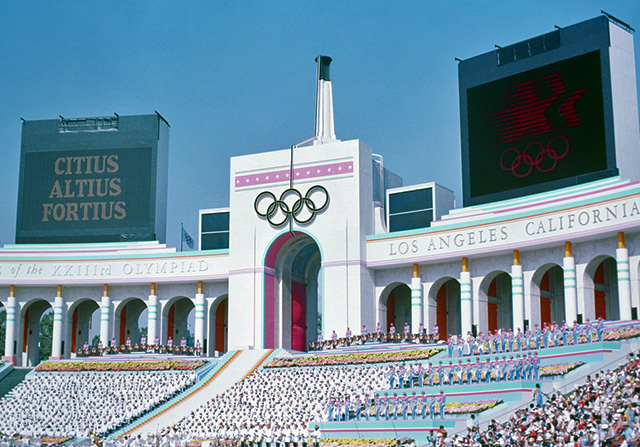 The cauldron was placed atop a tower at the top of the gateway to the 1932 Olympic Stadium
 Seoul 1988 (Olympic Stadium, Seoul, South Korea):
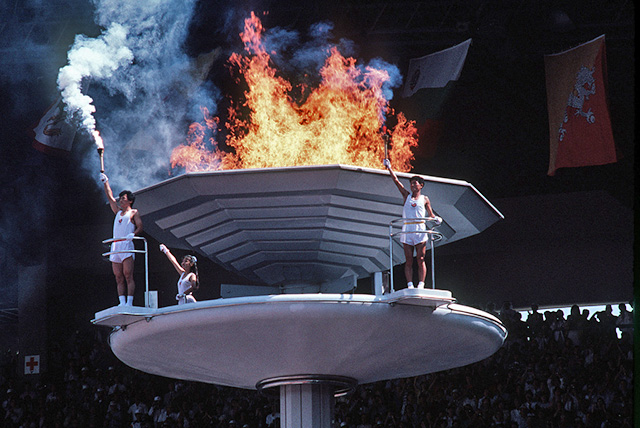 1988 Olympic flame
 Barcelona 1992 (Estadi Olímpic Lluís Companys, Barcelona, Spain): It was a spectacular lighting of the Olympic cauldron when Paralympic archer Antonio Rebollo lit the cauldron by shooting a burning arrow over it, which ignited gas rising from the cauldron.
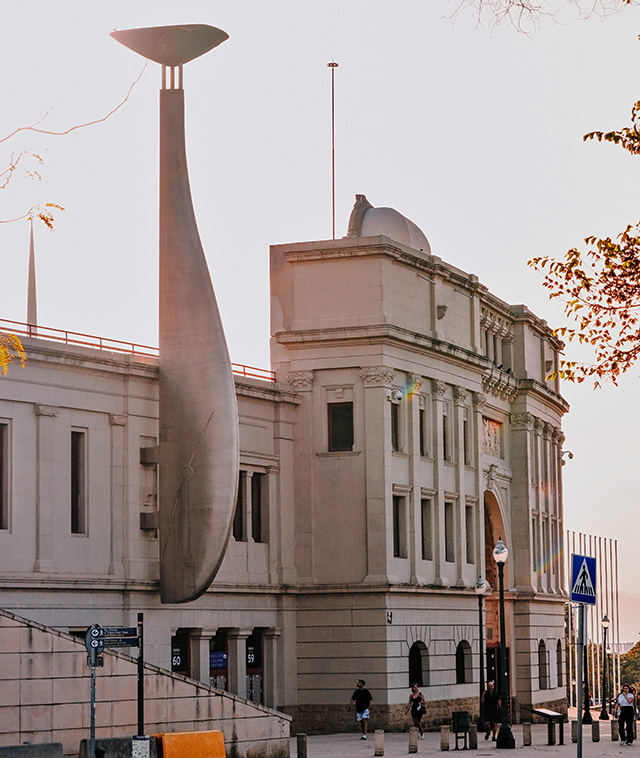 1992 Barcelona Olympic flame
 Atlanta 1996 (Centennial Olympic Stadium, Atlanta, USA): The cauldron was an artistic scroll decorated in red and gold. Ex-boxer Muhammad Ali lit the cauldron using a mechanical, self-propelling fuse ball, that transported the flame up a wire to the cauldron.
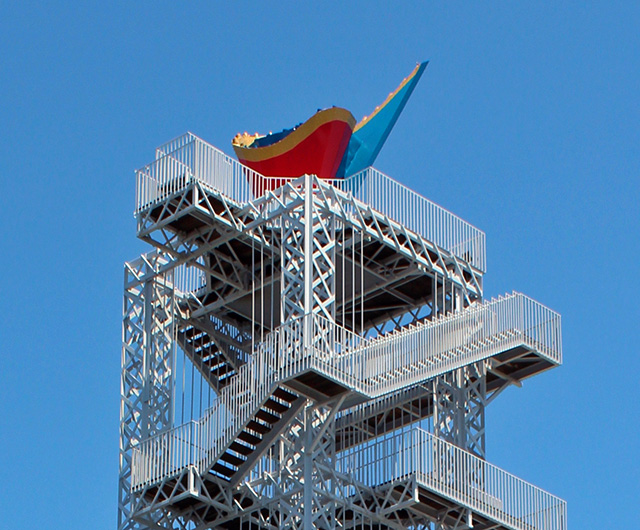 1996 Atlanta Olympic flame
 Sydney 2000 (Stadium Australia, Sydney, Australia): Australian Aboriginal 400m runner Cathy Freeman was the final torchbearer. She walked across a circular pool of water and ignited the gas coming up, surrounding herself within a ring of fire. The ring of fire was then planned to rise up around her, but a technical glitch left it hanging for about 4 minutes. Freeman went on to win the 400m race. She is the only person to light the Olympic Flame and win a gold medal at the same Games.
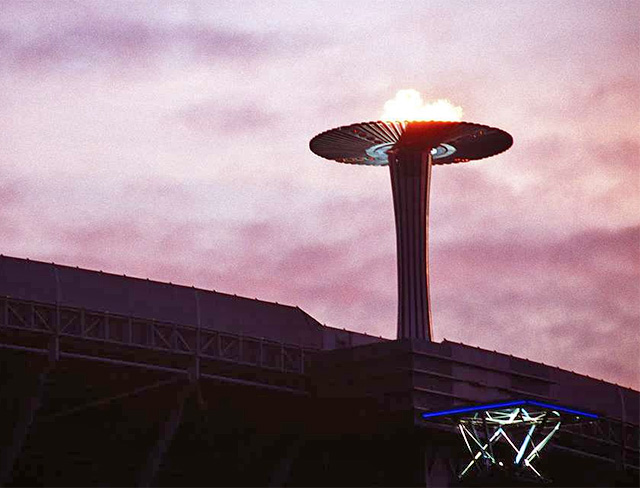 2020 Sydney Olympic flame
 Athens 2004 (Olympic Stadium, Athens, Greece): The cauldron was a giant reproduction of the Olympic torch, which bowed down to accept the flame from Greek windsurfer Nikolaos Kaklamanakis.
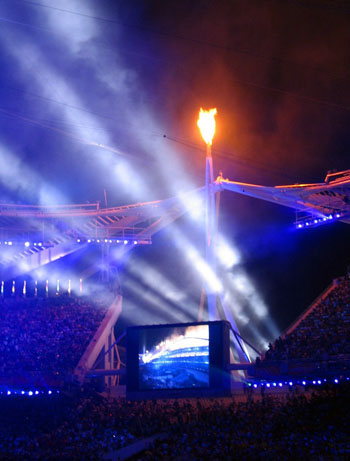 Athens Olympic flame
 Beijing 2008 (Beijing National Stadium, Beijing, China): The cauldron resembled the end of a scroll and it was also a giant version of the torch used in the torch relay.
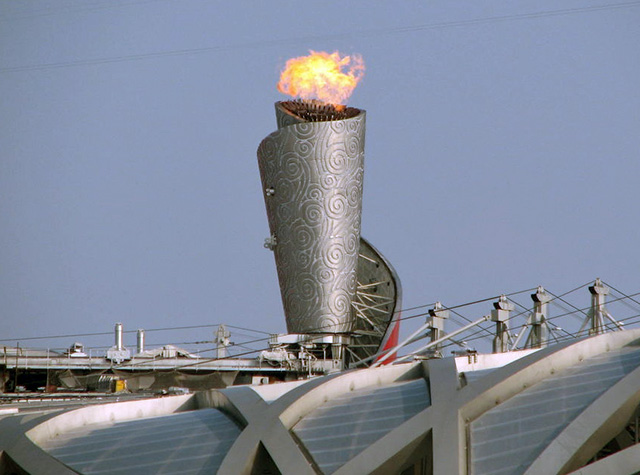 the Olympic cauldron in Beijing 2008
 London 2012 (Olympic Stadium, London, UK): Seven young British athletes each lit a single tiny flame on the ground, igniting 204 copper petals before they converged to form the cauldron for the Games.
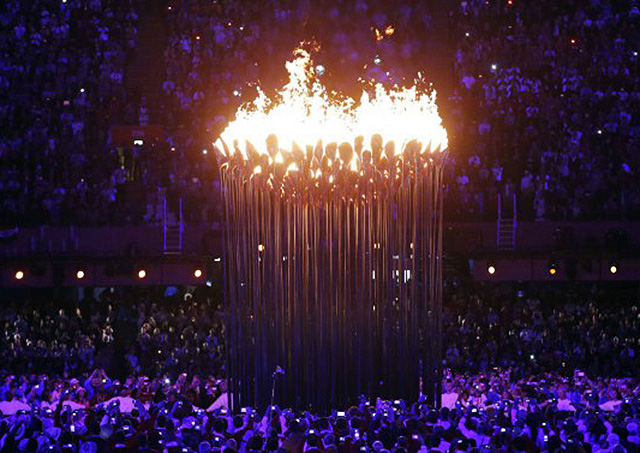 the Olympic cauldron in London 2012
 Rio de Janeiro 2016 (Maracanã Stadium, Rio de Janeiro, Brazil): The Rio 2016 Games had an innovative cauldron, which featured a kinetic sculpture with a small flame. The Brazilian Olympic cauldron breaks with a tradition of cauldrons that produce a large volume of fire. This cauldron is intentionally small and low emission. An additional cauldron was located in downtown Rio de Janeiro, which remains there as a reminder of the Games.
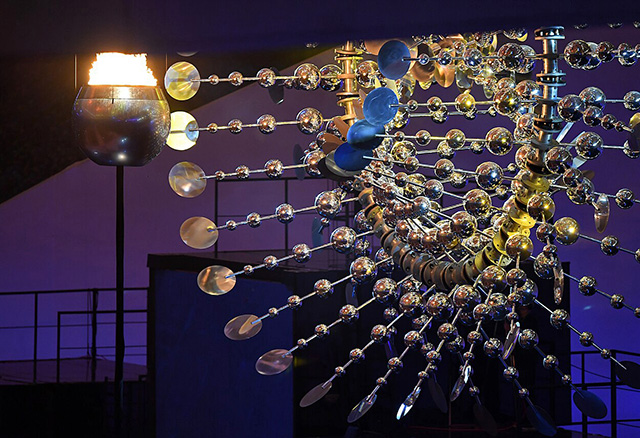 2016 Rio Olympic flame
 Tokyo 2020 (Olympic Stadium, Tokyo, Japan): In Tokyo, there were two cauldrons, a symbolic one in the stadium which was lit at the opening ceremony, and another on the waterfront which was burning for the duration of the Games. The cauldron started as a large closed ball, resembling the sun. This ball unfolded, revealing many petals of a flower. The Tokyo 1964 Olympic cauldron was put on display next to the New National Stadium.
Paris 2024: For the 2024 Paris Olympic Games, the Olympic flame was used to light a cauldron which was then raised into the air by a large balloon. Or so it seemed. What looked like a flame was actually an eco-friendly illusion made up of clouds of mist and beams of light. The ring is 7 meters (23 feet) in diameter, and the balloon is 30 meters (100 feet) tall and 22 meters (72 feet) wide. The location of the flame is the Tuileries Gardens in front of the iconic Louvre Museum, the same location that the first ever manned hydrogen balloon flight took off.
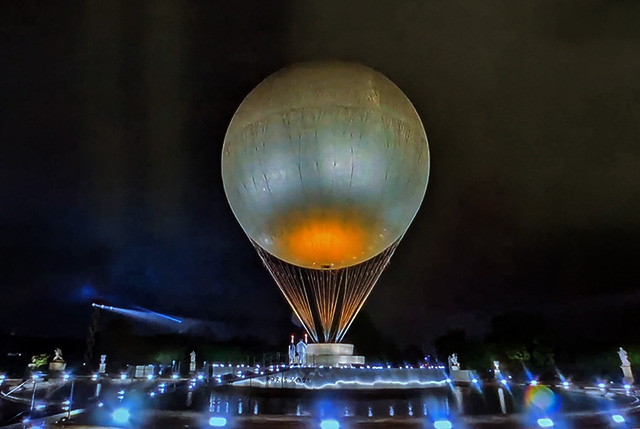 2024 Paris Flame
Related Pages
- All About the Olympic Flame
- Flames of the Future — innovative ideas for future Olympic Games flames
- Olympic Flame Trivia
- About the Olympic Torch and Torch Relay
- All Winter Olympic Flames
- Olympic Stadiums
- Other Olympic Traditions
 Any comments, suggestions, or corrections? Please let us know.