Equestrian Sports at the Olympic Games
Quick Answer
First introduced in 1900, Olympic equestrian is one of only two Olympic sports where men and women compete equally against each other. The competition includes both individual and team events across all three disciplines.
- Three main disciplines have been part of the modern Olympics since 1912
- Men and women have competed equally since 1952
- Isabell Werth of Germany holds the record with 14 Olympic medals (8 gold, 6 silver)
There are currently three disciplines in equestrian at the Olympics: Jumping, Dressage, Eventing. Show jumping was introduced to the Olympic Games in 1900. There were no equestrian events in 1904, and in 1908 Polo was the only equestrian sport. Dressage and Three-day eventing were introduced in 1912. The other horse event at the Olympics is the jumping component of the Modern Pentathlon.
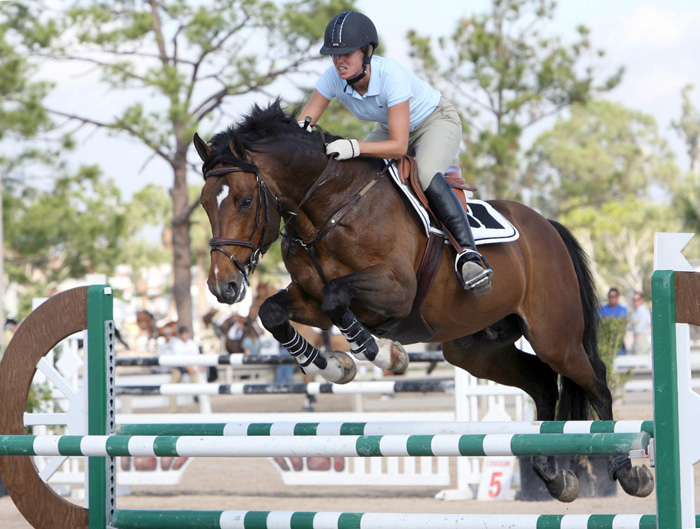
Jumping is one of the three disciplines in equestrian at the Olympics
There are several equestrian events that were once part of the program but have been discontinued: High jump and Long jump (1900) and Vaulting (1920). A couple of other equestrian events were Olympic demonstration events, Four-in-Hand "Mail Coach" and Hacks and Hunter Combined.
Olympic Equestrian Events
Jumping
Show jumping tests horse and rider over a course of obstacles. Penalties are awarded for knocking down rails or refusing jumps.
Dressage
Often called "horse ballet," dressage showcases the harmony and precision between horse and rider through predetermined movements.
Eventing
Three-day eventing is the triathlon of equestrian, combining dressage, cross-country, and show jumping over three days.
Historical Milestones and Trivia
- Equestrian first appeared at the Olympics in 1900.
- There are a few events that are no longer held. In 1900 there was Horse High jump and Horse Long jump, and in 1920 there was Vaulting for teams and individuals.
- The Olympic dressage competition started in 1912, and up until 1952, only commissioned officers were allowed to compete in these events. From 1952 the rules were changed to allow civilians and women to compete.
- Danish equestrian athlete Lis Hartel became the first woman in the equestrian sports to win an Olympic medal when she won silver medals at the 1952 and 1956 Summer Olympics in dressage.
- In 1952 Olympics in Helsinki, Fritz Thiedemann won bronze medals in both individual show jumping and team dressage, becoming the only rider in Olympic history to win medals in two equestrian disciplines at the same Games.
- As quarantine laws did not allow the entry of foreign horses into Australia (or there is at least a 6 months quarantine requirement), equestrian events at the 1956 Melbourne Olympics were held in Stockholm in June. The rest of the Games started in late November, when it is summer in the Southern Hemisphere.
- For the Beijing Olympics in 2008, the equestrian events were held in Hong Kong. This marked the second time the same edition of the Olympic Games being hosted by two National Olympic Committees. (the other time was when the equestrian events were held in Stockholm for the 1956 Melbourne Olympics).
- English Royalty Captain Mark Phillips was a member of the British three-day event team, which won the gold medal at the Munich Olympics and in 1988 won silver in the same event. His sister Princess Anne competed as a member of the UK equestrian team in 1976. Their daughter Zara competed in the 2012 London Olympics.
- The Equestrian events (and the equestrian part of Modern Pentathlon) are the only Olympic events that involve animals.
- At the 2008 Beijing Olympics, equestrian was one of the few events not to be contested within the city limits. All equestrian events were held in Hong Kong.
The oldest woman to compete in the Olympics was British rider Lorna Johnstone, who participated in Equestrian at the 1972 Olympic Games at 70 years old and 5 days. For the men, Arthur von Pongracz of Austria competed at age 72 in Dressage in 1936, becoming one of the oldest ever competitors at the Olympics. Shooter Oscar Swahn of Sweden was also 72 when he competed in 1920.
💡 Pro Tip: The partnership between horse and rider is crucial in Olympic equestrian. Many successful Olympic partnerships span multiple Olympic Games, with some horses competing in multiple Olympics with the same rider, demonstrating the importance of long-term training and trust.
Notable Participants
- The oldest woman to compete in the Olympics was British rider Lorna Johnstone, who participated in Equestrian at the 1972 Olympic Games at 70 years old and 5 days. For the men, Arthur von Pongracz of Austria competed at age 72 in Dressage in 1936, becoming one of the oldest ever competitors at the Olympics (the oldest, shooter Oscar Swahn of Sweden, was also 72 when he competed in 1920).
- In Beijing 2008, equestrian rider Hiroshi Hoketsu became the oldest Japanese Olympic representative at age 67. Hoketsu also took part in the 1964 Tokyo Games where he finished 40th in the show jumping event.
- Canadian show jumper Ian Millar made a record-breaking 10th Olympic appearance in London 2012. He competed in the equestrian competition at every Olympics from 1972 to 2012 except for the 1980 Moscow Games that Canada boycotted.
- The highest ranked equestrian at the Olympic Games is German rider Isabell Werth, who won eight gold and six silver medals between 1992 and 2024. The best male all-time performing equestrian athlete at the Olympic Games is another German, Reiner Klimke, who competed between 1964–1988 winning six gold medals and two bronze. See more on the Greatest Equestrian Athletes at the Olympics.
Frequently Asked Questions
What equestrian disciplines are included in the Olympics?
The Olympics feature three equestrian disciplines: Jumping (show jumping), Dressage, and Eventing (three-day eventing). Each discipline includes both individual and team competitions, making for six total medal events in equestrian sports.
When was equestrian first included in the Olympic Games?
Equestrian events first appeared at the Olympics in 1900 with show jumping. However, the modern program with all three disciplines wasn't established until 1912, when dressage and three-day eventing were added to the Stockholm Games.
Why were the 1956 equestrian events held in Stockholm instead of Melbourne?
Due to Australia's strict quarantine laws requiring a 6-month quarantine period for foreign horses, the equestrian events for the 1956 Melbourne Olympics were held in Stockholm, Sweden, in June 1956. This occurred five months before the main Games, which took place in Melbourne in November when it's summer in the Southern Hemisphere.
Can men and women compete together in Olympic equestrian?
Yes, equestrian is one of only two Olympic sports where men and women compete equally against each other in the same events. This has been the case since 1952 when the rules changed to allow civilians and women to compete. Before 1952, only commissioned military officers were permitted to participate.
Who is the most successful equestrian athlete at the Olympics?
German rider Isabell Werth is the highest-ranked equestrian at the Olympic Games, having won eight gold medals and six silver medals between 1992 and 2024. This makes her one of the most decorated Olympic athletes of all time across all sports. For men, fellow German Reiner Klimke holds the record with six gold medals and two bronze between 1964 and 1988.
What are the age requirements for Olympic equestrian competitors?
There is no maximum age limit for Olympic equestrian competitors, which is unique among Olympic sports. Riders as old as 72 have competed. The minimum age is 18 for all three disciplines. This age flexibility allows for remarkably long careers, with some athletes competing across multiple decades.
Why were the 2008 equestrian events held in Hong Kong instead of Beijing?
The equestrian events for the 2008 Beijing Olympics were held in Hong Kong due to concerns about equine diseases and quarantine regulations. Hong Kong's existing world-class equestrian facilities and its status as a separate customs territory made it the ideal location. This was only the second time Olympic events were split between two host cities.
References
- International Olympic Committee. (2024). "Equestrian at the Olympic Games." Olympic.org. Retrieved from https://www.olympic.org
- Fédération Equestre Internationale (FEI). (2024). "Olympic Equestrian History." FEI Official Website.
- Wallechinsky, D., & Loucky, J. (2012). "The Complete Book of the Olympics: 2012 Edition." Aurum Press.
- International Olympic Committee. (2023). "Olympic Charter and Regulations." IOC Official Publications.
- British Equestrian Federation. (2020). "A History of Equestrian Sport at the Olympics." British Equestrian Official Archives.
- Mackay-Smith, A., Druesedow, J., & Ryder, T. (1984). "Man and the Horse: An Illustrated History of Equestrian Apparel." New York: Simon & Schuster.
- International Olympic Committee. (2024). "Medal Database - Equestrian." Olympic.org Statistics.
- Deutsche Reiterliche Vereinigung. (2024). "German Equestrian Olympic History." German Equestrian Federation.
Related Pages
Olympic Jumping
Learn about show jumping at the Olympics, including history, rules, and notable champions in this exciting discipline.
Learn More →Olympic Dressage
Discover the art of dressage, often called "horse ballet," and its evolution as an Olympic sport since 1912.
Learn More →Olympic Eventing
Explore three-day eventing, the ultimate test of horse and rider combining dressage, cross-country, and show jumping.
Learn More →Ancient Olympic Equestrian
Equestrian events like chariot racing were also held at the ancient Olympic Games in Greece.
Learn More →Greatest Olympic Equestrians
View rankings and medal tallies of the most successful equestrian athletes in Olympic history.
Learn More →Discontinued Equestrian Events
Learn about equestrian events like high jump, long jump, and vaulting that were once part of the Olympics.
Learn More →Demonstration Equestrian Events
Explore demonstration equestrian events that were showcased but not officially contested at the Olympics.
Learn More →Modern Pentathlon
The Modern Pentathlon includes an equestrian show jumping component as one of its five disciplines.
Learn More →Paralympic Equestrian
Discover para-equestrian dressage at the Paralympic Games and the inspiring athletes who compete.
Learn More →FEI World Equestrian Games
Learn about the World Equestrian Games, the major international championship for equestrian sports.
Learn More →Olympic Sports with Animals
Explore the history of animal involvement in Olympic sports, from polo to modern pentathlon.
Learn More →The Sport of Equestrian
More about the sport of equestrian, including rules, equipment, and major competitions worldwide.
Learn More → Any comments, suggestions, or corrections? Please let us know.